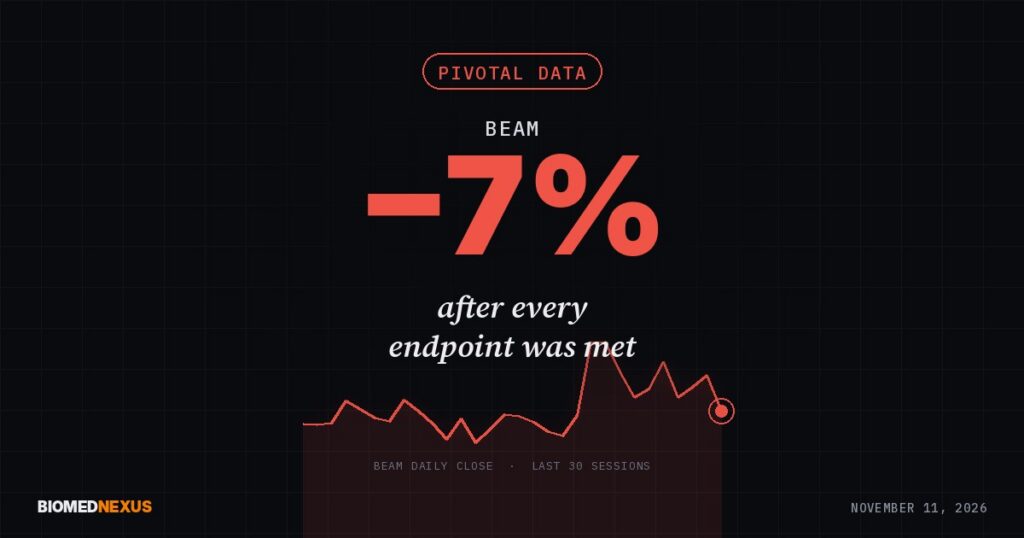
The FDA approved Pimjetmi (pimicotinib) for symptomatic TGCT on Nov 10, 2026, giving patients a third CSF1R drug and the first taken once daily.
Last updated: November 11, 2026
The FDA approved Pimjetmi (pimicotinib), EMD Serono’s once daily oral CSF1R inhibitor, on November 10, 2026 for adults with symptomatic tenosynovial giant cell tumor when surgery could worsen function. In the MANEUVER trial, 56% of patients responded at week 25 versus 3.2% on placebo.
Scope: what was approved, the data behind it, how it compares with Turalio and Romvimza on paper, the Abbisko licensing deal, and what to watch at launch.
What did the FDA approve on November 10, 2026?
The FDA approved pimicotinib, sold as Pimjetmi by EMD Serono (the US healthcare business of Merck KGaA, Darmstadt, Germany), for adults with symptomatic tenosynovial giant cell tumor (TGCT) for whom surgical resection may cause worsening functional limitation or severe morbidity. The dose is 50 mg by mouth once daily, with or without food.
TGCT is a rare, usually benign tumor of the joint lining and tendon sheaths, most often in the knee. It is driven by overexpression of colony stimulating factor 1 (CSF1), which recruits the macrophages that make up most of the tumor mass. Blocking the CSF1 receptor (CSF1R) shrinks the tumor. Surgery remains the standard for many patients, but diffuse disease recurs often and repeat operations can damage the joint, which is exactly the population this label targets.
Pimicotinib carried Fast Track and Breakthrough Therapy designations. The FDA reviewed it under Project Orbis alongside Australia’s TGA, Health Canada, Israel’s Ministry of Health, Swissmedic and the UK MHRA, with the EMA observing. It was already approved in China (December 2025), Canada (June 2026) and Switzerland (October 2026), according to EMD Serono.
What did the MANEUVER trial show?
MANEUVER (NCT05804045) was a double blind, placebo controlled international Phase 3 trial that randomized 94 patients 2 to 1 to pimicotinib 50 mg once daily (63) or placebo (31) for 24 weeks. The primary endpoint, objective response rate at week 25 by blinded independent central review, came in at 56% versus 3.2%.
| MANEUVER measure (week 25) | Pimicotinib | Placebo |
|---|---|---|
| Objective response rate (BICR, RECIST v1.1) | 56% (95% CI 42 to 68) | 3.2% (95% CI 0.1 to 17) |
| Patients randomized (Part 1) | 63 | 31 |
| Range of motion, worst pain, physical function | All statistically significant versus placebo (p=0.0003, p<0.0001, p=0.0074 per EMD Serono) | |
| Durability among responders | Median not reached; 91% responded for at least 6 months, 77% for at least 12 months (FDA) | |
Source: FDA approval notice (Nov 10, 2026) and EMD Serono release (Nov 10, 2026). One note on the record: Merck KGaA’s December 2025 release on the China approval cited a week 25 response rate of 54.0% versus 3.2%. The FDA’s US review reports 56%. We use the FDA figure because it is what the US label rests on.
The functional endpoints matter as much as the scan. TGCT patients come to treatment because of pain and stiffness, and payers will look for evidence that tumor shrinkage translates into a working joint. MANEUVER hit on range of motion, pain and the PROMIS physical function score.
What are the safety issues and label warnings?
The most common adverse reactions (over 20%) were itching, rash, facial and periorbital swelling, fatigue, nausea, headache and peripheral swelling. Warnings and precautions cover hepatotoxicity, embryo fetal toxicity and increased serum creatinine without an effect on kidney function. The FDA notice does not mention a boxed warning.
EMD Serono says MANEUVER showed no evidence of cholestatic hepatotoxicity or hair and skin hypopigmentation, with one patient (1.6%) stopping for side effects and 7.9% needing a dose reduction. The label still calls for liver testing: monthly for the first three months, then every three months through the first year, per the company. Laboratory abnormalities over 30% included raised CPK, LDH, AST, ALT, lipase, amylase and cholesterol.
How does Pimjetmi compare with Turalio and Romvimza?
Pimjetmi is the third CSF1R inhibitor approved for TGCT in the US, after Daiichi Sankyo’s Turalio (pexidartinib, 2019) and Deciphera’s Romvimza (vimseltinib, 2025). It is the first dosed once a day. The three were never tested head to head, so the response rates below come from separate trials and should not be ranked against each other.
| Turalio (pexidartinib) | Romvimza (vimseltinib) | Pimjetmi (pimicotinib) | |
|---|---|---|---|
| US approval | Aug 2, 2019 | Feb 14, 2025 | Nov 10, 2026 |
| Company | Daiichi Sankyo | Deciphera | EMD Serono (licensed from Abbisko) |
| Pivotal trial | ENLIVEN, n=120 | MOTION, n=123 | MANEUVER, n=94 |
| Week 25 response, drug vs placebo | 38% vs 0% | 40% vs 0% | 56% vs 3.2% |
| Dosing | Twice daily | 30 mg twice weekly | 50 mg once daily |
| Liver safety on the approval record | Boxed warning for serious and potentially fatal liver injury; approved with a REMS | No boxed warning or REMS mentioned in FDA notice | Hepatotoxicity warning; no boxed warning mentioned in FDA notice |
Sources: FDA approval notices for each drug. Trial populations, response criteria details and follow up differ.
The practical competition is with Romvimza. Turalio’s boxed liver warning and REMS add friction for prescribers. Romvimza arrived without a boxed warning and with a twice weekly schedule. Pimjetmi now offers daily dosing, the highest response rate printed on any of the three labels, and a company claim of no cholestatic liver injury in its pivotal trial. Expect EMD Serono to sell on response and function, and Deciphera to sell on its dosing schedule and a longer head start.
Who developed pimicotinib and what was the deal?
Abbisko Therapeutics of Shanghai (HKEX: 02256) discovered pimicotinib. In late 2023 Merck KGaA licensed commercialization rights in mainland China, Hong Kong, Macau and Taiwan for $70 million upfront, plus regulatory and commercial milestones, double digit tiered royalties and an option on the rest of the world. Merck KGaA now holds worldwide commercialization rights.
Abbisko said the US approval triggers a further milestone payment on first US commercial sale, without naming the amount. It calls Pimjetmi its first proprietary innovative medicine to reach commercialization. For the industry, this is another China originated molecule licensed West that has now cleared the FDA, and it reached US approval after its home market, not before. That sequence is becoming a pattern buyers price in.
What we do not know yet
EMD Serono’s November 10 release does not state a US list price or a launch date (scope: the company release and FDA notice as published Nov 10, 2026). The full prescribing information was not yet posted to Drugs@FDA when we checked. The milestone amount owed to Abbisko is undisclosed.
Our framework: how to read a third entrant in a small market
Use this checklist (our framework) when a third drug enters a rare disease class:
- Label scope. All three TGCT labels use nearly the same surgical morbidity language, so differentiation will not come from indication.
- Monitoring burden. Count required liver tests and REMS steps. Fewer clinic visits is a real selling point in a chronic, often young patient group.
- Dosing convenience. Once daily, twice weekly and twice daily each fit different patients. Adherence data after launch will tell.
- Payer step edits. Watch whether plans require trial of an earlier agent first.
- Durability and stopping. TGCT patients may want to stop therapy. Data on regrowth after discontinuation will shape real world use.
- Ex US launches. Project Orbis partner decisions and the EU process set the global revenue base.
What to watch next
- US list price and launch timing from EMD Serono.
- Decisions by the remaining Project Orbis partners (Australia, Israel, UK) and the EU path under PRIME.
- Abbisko’s disclosure of the US first sale milestone.
- Deciphera’s response on Romvimza pricing and access.
- Longer MANEUVER follow up, including outcomes after stopping treatment.
FAQ
What is Pimjetmi?
Pimjetmi is the brand name for pimicotinib, an oral CSF1R kinase inhibitor from EMD Serono, approved by the FDA on November 10, 2026 for adults with symptomatic tenosynovial giant cell tumor when surgery could worsen function or cause severe morbidity.
What is tenosynovial giant cell tumor?
TGCT is a rare, usually non cancerous tumor of the joint lining, bursae and tendon sheaths. It most often affects the knee and can cause pain, swelling, stiffness and joint damage, especially in the diffuse form, which tends to recur after surgery.
How well did pimicotinib work in its pivotal trial?
In MANEUVER, 56% of patients on pimicotinib had an objective tumor response at week 25 by independent review, compared with 3.2% on placebo. Range of motion, pain and physical function also improved significantly.
How is Pimjetmi taken?
The approved dose is 50 mg by mouth once daily, with or without food. It is the first CSF1R inhibitor for TGCT with a once daily schedule.
Does Pimjetmi have a boxed warning?
The FDA approval notice lists warnings for hepatotoxicity, embryo fetal toxicity and increased serum creatinine, and does not mention a boxed warning. Turalio, by contrast, carries a boxed warning for serious and potentially fatal liver injury.
How does it compare with Romvimza?
Romvimza (vimseltinib) showed a 40% week 25 response rate versus 0% on placebo in MOTION and is taken twice weekly. Pimjetmi showed 56% versus 3.2% and is taken daily. The trials were separate, so the numbers are not a head to head comparison.
Who makes pimicotinib?
Abbisko Therapeutics discovered it. Merck KGaA, Darmstadt, Germany, operating as EMD Serono in the US, holds worldwide commercialization rights under a license first signed in late 2023.
Where else is pimicotinib approved?
According to EMD Serono, pimicotinib was approved in China in December 2025, Canada in June 2026 and Switzerland in October 2026 before the US decision. It holds PRIME designation from the EMA.
What is Project Orbis?
Project Orbis is an FDA Oncology Center of Excellence program that lets partner regulators review cancer drug applications in parallel. Pimicotinib was reviewed with Australia, Canada, Israel, Switzerland and the UK, with the EMA observing.
What does Pimjetmi cost?
EMD Serono did not disclose a US price in its approval release. We will update this article when a list price is published.
Sources
- FDA, “FDA approves pimicotinib for symptomatic tenosynovial giant cell tumor,” Nov 10, 2026 (primary).
- EMD Serono, Pimjetmi FDA approval press release, Nov 10, 2026 (primary).
- Abbisko Therapeutics, US approval release via PR Newswire, Nov 10, 2026 (primary).
- EMD Serono, NDA acceptance release, Jan 12, 2026 (primary, trial design).
- Merck KGaA, China approval release via Business Wire, December 2025 (primary; source of the 54.0% figure noted above).
- Merck KGaA, Abbisko commercialization agreement release via Business Wire, 2023 (primary, deal terms).
- FDA, “FDA approves vimseltinib for symptomatic tenosynovial giant cell tumor,” Feb 14, 2025 (primary).
- FDA, “FDA approves pexidartinib for tenosynovial giant cell tumor,” Aug 2, 2019, and FDA press announcement on the first therapy for the rare joint tumor (primary).
Related coverage
- Sunharbo approval: the first Factor XIa drug for stroke prevention
- Rybrevant Faspro approved in head and neck cancer
- FDA accelerated approval and confirmatory trial rules explained
- Earnouts, CVRs and royalties: how biotech deals bridge value gaps
- Treasury proposes outbound investment curbs on biotech
- BioMed Nexus company directory
Get the daily briefing that connects approvals like this to the rest of the industry: subscribe to BioMed Nexus.