FDA accelerated approval explained as of November 2026: surrogate endpoints, when confirmatory trials must be underway, and withdrawal under FDORA.
Last updated: November 6, 2026
FDA accelerated approval lets a drug for a serious condition reach the market on a surrogate or intermediate endpoint that is reasonably likely to predict clinical benefit. Since FDORA, the FDA can require the confirmatory trial to be underway before approval, demand progress reports every 180 days and withdraw approval through expedited procedures.
This guide explains the accelerated approval pathway for drug and biologic sponsors, regulatory teams, investors and commercial leaders, using the FDA’s own guidance and four programs moving through the pathway this fall.
What is FDA accelerated approval?
Accelerated approval is a US marketing approval, not a designation, for drugs and biologics that treat a serious or life threatening condition and offer a meaningful advantage over available therapy. It is granted on an endpoint that is reasonably likely to predict clinical benefit, with the sponsor required to confirm that benefit afterward.
The authority sits in section 506(c) of the Federal Food, Drug, and Cosmetic Act, with implementing regulations at Subpart H for drugs and Subpart E for biologics. The FDA’s December 2024 draft guidance describes two kinds of endpoints that can support it:
- Surrogate endpoint: a biomarker such as a laboratory value, imaging finding or physical sign that is thought to predict clinical benefit but does not measure it directly. Tumor response rate and proteinuria are common examples.
- Intermediate clinical endpoint: a clinical effect measured earlier than irreversible morbidity or mortality that is reasonably likely to predict that longer term outcome or another clinical benefit.
The same guidance says accelerated approval should not be considered when an adequate and well controlled trial to verify clinical benefit would be infeasible. In other words, the FDA wants to know how benefit will be confirmed before it agrees to approve on the surrogate.
How is accelerated approval different from Fast Track, Breakthrough and Priority Review?
Accelerated approval changes the evidence the FDA will accept at approval. The other three expedited programs change how the agency works with a sponsor or how fast it reviews, but not the evidentiary basis. A single product can use several at once.
| Program | What it is | What it changes | Post approval obligation |
|---|---|---|---|
| Accelerated approval | Approval pathway | Allows approval on a surrogate or intermediate clinical endpoint | Confirmatory trial to verify clinical benefit, with FDA set conditions |
| Fast Track | Designation | More frequent FDA interaction and rolling review of the application | None specific to the designation |
| Breakthrough Therapy | Designation | Intensive FDA guidance on development, plus Fast Track features | None specific to the designation |
| Priority Review | Review designation | Six month review goal instead of the standard ten months | None specific to the designation |
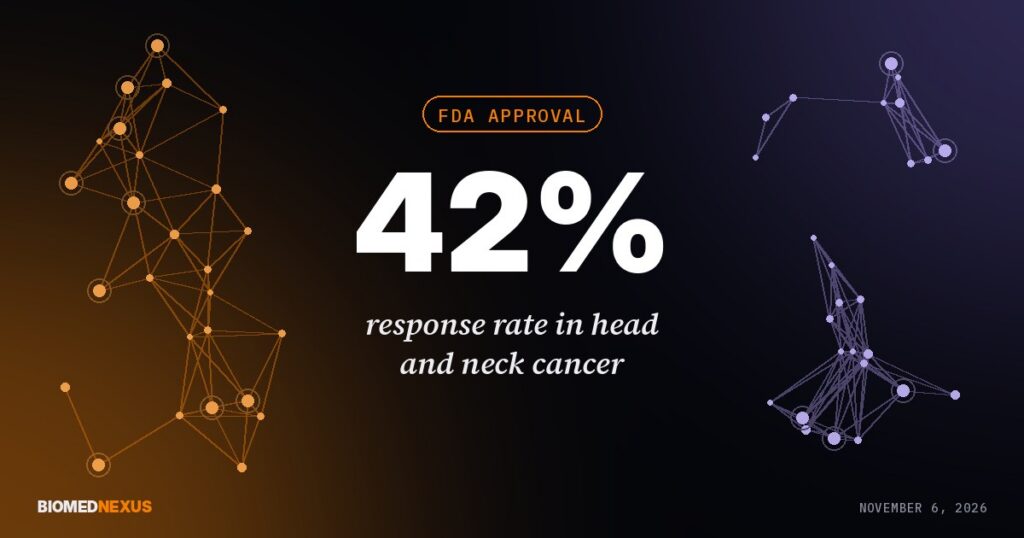
The November 5, 2026 approval of Johnson & Johnson’s Rybrevant Faspro in head and neck cancer is a good example of stacking: it was an accelerated approval that also carried breakthrough therapy designation and priority review.
What did FDORA change about accelerated approval?
Section 3210 of the Food and Drug Omnibus Reform Act, passed as part of the Consolidated Appropriations Act, 2023, gave the FDA new tools to make sure confirmatory trials actually finish. The FDA has since explained how it plans to use them in two draft guidances, from December 2024 and January 2025.
| Requirement | Before FDORA | After FDORA, per FDA draft guidance |
|---|---|---|
| Confirmatory trial timing | Commitment to conduct postapproval studies | FDA may require the trial to be underway before approval, and generally intends to |
| Trial conditions | Typically agreed as postmarketing requirements | FDA sets conditions no later than approval, such as enrollment targets and a completion date |
| Progress reporting | Annual postmarketing reporting | Progress reports roughly every 180 days until the trial is complete |
| Withdrawal | Formal hearing process that could take years | Expedited procedures: notice, meeting, written appeal, public comment |
Two other requirements in the guidance matter more now that confirmatory trials run alongside launch. The indications section of the label must state the limits of the evidence and any uncertainty about the anticipated benefit. And promotional materials meant for the first 120 days after approval go to the FDA during the review period, with later materials due at least 30 days before first use.
Both guidances were still marked draft on the FDA’s website when we checked on November 6, 2026. Draft guidance carries the agency’s current thinking but is not binding, so sponsors should confirm expectations directly with their review division.
When does the FDA consider a confirmatory trial “underway”?
Under the January 2025 draft guidance, a confirmatory trial is generally underway if it has a target completion date consistent with diligent conduct, the sponsor’s progress and plans give assurance it will finish on time, and enrollment has started. A protocol on paper is not enough.
The FDA states plainly that if it decides a confirmatory trial must be underway and it is not, the agency does not intend to grant accelerated approval until that is fixed. The guidance does allow limited exceptions. For some rare diseases, for example, nonrandomized evidence may be enough to verify benefit, or a confirmatory study may depend on a future event. Sponsors are expected to justify any exception early.
The practical consequence is that the confirmatory trial has moved up the development timeline. Sites, drug supply, budget and enrollment for the confirmatory study now need to be in motion while the accelerated approval application is under review, not after the approval letter arrives.
How does the FDA withdraw an accelerated approval?
FDORA lets the FDA withdraw an accelerated approval if the sponsor fails to run the required trial with due diligence, the trial fails to verify benefit, other evidence shows the drug is not safe or effective, or the sponsor disseminates false or misleading promotion.
The December 2024 draft guidance describes the expedited steps:
- The center sends the sponsor written notice and an explanation of the proposed withdrawal, with the center director’s concurrence.
- The sponsor can meet with the Commissioner or a designee and submit a written appeal.
- The FDA publishes a Federal Register notice and opens a public comment period, generally 30 days.
- The FDA publishes a summary of comments and its response.
- If the sponsor asks and no advisory committee has already weighed in on the issues, an advisory committee is convened.
- The Commissioner or designee decides. If a withdrawal ground is met, the FDA generally intends to withdraw absent unusual circumstances.
The first use of these procedures was Oncopeptides’ Pepaxto in multiple myeloma. The FDA’s drugs center issued its notice in July 2023 after the confirmatory OCEAN trial raised survival concerns, Oncopeptides appealed, and CBER Director Peter Marks, acting as the Commissioner’s designee, issued the final withdrawal on February 23, 2024. Pink Sheet reporting put that at about seven months from proposal to final order, compared with about 11 months for Avastin’s breast cancer indication and about 30 months for Makena under the older process.
What do accelerated approval programs look like in late 2026?
Four programs on this fall’s calendar show the main ways sponsors now pair an accelerated approval endpoint with a confirmatory plan. The table below is our comparison, built from FDA notices and company disclosures.
| Program | Status | Accelerated approval basis | Confirmatory approach |
|---|---|---|---|
| Rybrevant Faspro (amivantamab and hyaluronidase-lpuj), J&J, recurrent or metastatic head and neck cancer | Approved November 5, 2026 | 42% response rate (95% CI 32 to 52) in 102 patients, OrigAMI-4 (NCT06385080) | Not named in the FDA notice; continued approval depends on confirmatory evidence |
| Voceryq (INO-3107), Inovio, recurrent respiratory papillomatosis | Approved October 30, 2026 | 27% complete response (7 of 26), no surgery over 12 months, single arm RRP-001 | Draft confirmatory protocol due by end of 2026, final alignment expected mid 2027 |
| Povetacicept, Vertex, IgA nephropathy | PDUFA date November 30, 2026 | 52.0% proteinuria reduction from baseline at week 36, interim analysis of Phase 3 RAINIER (NCT06564142) | Same trial continues blinded to a week 104 eGFR slope endpoint |
| Ifezuntirgene inilparvovec (AMT-130), uniQure, Huntington’s disease | BLA accepted, priority review, PDUFA date May 1, 2027 | Three year Phase 1/2 data | Separate randomized trial of about 200 patients, 2:1 versus standard of care, Total Functional Capacity at 36 months; screening expected to start by end of 2026 |
The designs carry different risk. Vertex’s approach, where the confirmatory endpoint comes from the same randomized trial that produced the interim surrogate, is the cleanest answer to the “underway” test because the trial is already fully enrolled. Single arm oncology and rare disease approvals like Rybrevant Faspro and Voceryq leave more open after approval: the confirmatory design, its timeline and the population it will enroll. uniQure’s plan sits in between, with a defined randomized study that has not started enrolling yet. Its stated goal is to have that study well underway by the May 2027 decision date, which is exactly what the January 2025 draft guidance asks for.
How should sponsors plan for accelerated approval in 2026?
Plan the confirmatory trial as part of the accelerated approval program from the first FDA meeting. The checklist below reflects the FDA’s draft guidance and recent program histories. It is our framework, not an FDA document.
- Before the end of Phase 2 meeting: confirm with the review division that your surrogate or intermediate endpoint is acceptable for the population, and ask what clinical benefit endpoint will be required to confirm it.
- Choose the confirmatory design early. Decide between a same trial design, with an interim surrogate readout and a later clinical endpoint, and a separate confirmatory trial. The first is cleaner on timing; the second may be necessary when the accelerated approval data are single arm.
- Get enrollment started before submission when you can. The FDA generally expects the trial to be underway when the application is submitted and intends to require it before approval.
- Budget for both trials at once. The confirmatory study now overlaps the review and launch period, which changes cash runway math for smaller companies. Lenders and investors will ask about it.
- Agree on milestones in writing. Expect the FDA to set enrollment targets and a completion date no later than approval, and build an internal system for the 180 day progress reports.
- Prepare launch materials during review. Promotional materials for the first 120 days after approval need to go to the FDA during the review period, so commercial teams should start earlier than they would for a traditional approval.
- Write the label and messaging around uncertainty. The indications section will describe the limits of the evidence. Field teams, payers and patients will all see that language.
- Model the downside. If the confirmatory trial misses, the expedited withdrawal process can move in months, as Pepaxto showed. Revenue forecasts and partnership terms should account for that possibility.
Frequently asked questions
What is accelerated approval in simple terms?
It is an FDA approval for a drug treating a serious condition based on an early marker, such as tumor shrinkage or a lab value, that is reasonably likely to predict real clinical benefit. The company must then prove that benefit in a confirmatory trial.
Is accelerated approval the same as full approval?
No. It is a real marketing approval that allows the drug to be sold and prescribed, but it comes with conditions and is distinct from traditional approval. If the confirmatory trial verifies clinical benefit, the FDA can convert it to traditional approval. If it does not, the FDA can withdraw it.
What is a surrogate endpoint?
A measure such as a laboratory value, imaging result or physical sign that is thought to predict clinical benefit but does not measure how a patient feels, functions or survives. Response rate in cancer and proteinuria in kidney disease are common examples.
What does FDORA require for confirmatory trials?
FDORA lets the FDA require confirmatory trials to be underway before approval or within a set time afterward, requires progress reports about every 180 days, and created expedited procedures for withdrawing approval when benefit is not confirmed.
When is a confirmatory trial considered underway?
Under the FDA’s January 2025 draft guidance, generally when the trial has a target completion date consistent with diligent conduct, the sponsor’s plans give assurance of timely completion, and enrollment has begun.
Are the FDA’s accelerated approval guidances final?
No. Both the December 2024 programmatic guidance and the January 2025 confirmatory trial guidance were still listed as draft on the FDA website as of November 6, 2026. They reflect FDA thinking but are not binding.
How long does it take the FDA to withdraw an accelerated approval?
Under the FDORA procedures it can take months rather than years. Pepaxto, the first withdrawal under the new process, took about seven months from the FDA’s proposal to its final decision on February 23, 2024, according to Pink Sheet.
Can a drug have accelerated approval and priority review at the same time?
Yes. Priority review shortens the review clock, while accelerated approval changes the evidence accepted. Rybrevant Faspro’s November 5, 2026 approval in head and neck cancer used both, along with breakthrough therapy designation.
Does accelerated approval apply to rare diseases?
Yes, and the FDA’s draft guidance gives rare diseases some flexibility. For example, the agency may not require a confirmatory trial to be underway before approval when nonrandomized studies could be enough to verify benefit.
What happens to promotional materials under accelerated approval?
Sponsors must submit promotional materials intended for the first 120 days after approval during the review period. After that, materials are submitted at least 30 days before first use unless the FDA says otherwise.
Sources
- FDA draft guidance, “Expedited Program for Serious Conditions: Accelerated Approval of Drugs and Biologics,” December 2024 (primary)
- FDA draft guidance, “Accelerated Approval and Considerations for Determining Whether a Confirmatory Trial Is Underway,” January 2025, docket FDA-2024-D-3334, status checked November 6, 2026 (primary)
- FDA, Accelerated Approval Program page, content current as of August 25, 2026 (primary)
- FDA statement on the final decision to withdraw Pepaxto, February 23, 2024, as reported by HPN Online and Troutman Pepper (attributed); Pink Sheet on withdrawal timelines, via Friends of Cancer Research (attributed)
- FDA approval notice for amivantamab and hyaluronidase-lpuj in head and neck cancer, November 5, 2026 (primary, as covered by BioMed Nexus)
- Inovio release on Voceryq accelerated approval, October 30, 2026 (primary, as covered by BioMed Nexus)
- Vertex releases, June 1, 2026 and October 23, 2026, on the povetacicept BLA and RAINIER results (primary)
- uniQure release, November 2, 2026, on BLA acceptance and the confirmatory trial design (primary, via GlobeNewswire carries)
- RAPS Regulatory Focus, January 2025, quoting the confirmatory trial draft guidance (attributed)
Related coverage
- Rybrevant Faspro won accelerated approval in head and neck cancer on a 42% response rate
- Inovio won its first approval with DNA immunotherapy Voceryq
- How to choose a regulatory and compliance consultant
- How to budget a clinical trial
- Using the FDA calendar as a planning tool
- Find regulatory and compliance consultants in the BioMed Nexus directory
BioMed Nexus covers every major FDA decision the morning after it lands. Get the daily briefing free.