
BioCryst pediatric Orladeyo PDUFA decision today could make it first oral HAE prophylaxis for children 2-11 with ±15% volatility expected, Isomorphic Labs (Google DeepMind spinout) initiates first AI-designed clinical trials marking shift from “in silico theory to in human reality,” Recursion Pharmaceuticals validates AI platform with positive REC-4881 FAP Phase 2 data (+2.1%), Medra raises $52M for AI-powered lab robotics enabling “self-driving labs” accelerating design-make-test cycles 10x, and XBI holds post-CPI gains consolidating +0.5% as tech capital rotates into AI biotech infrastructure
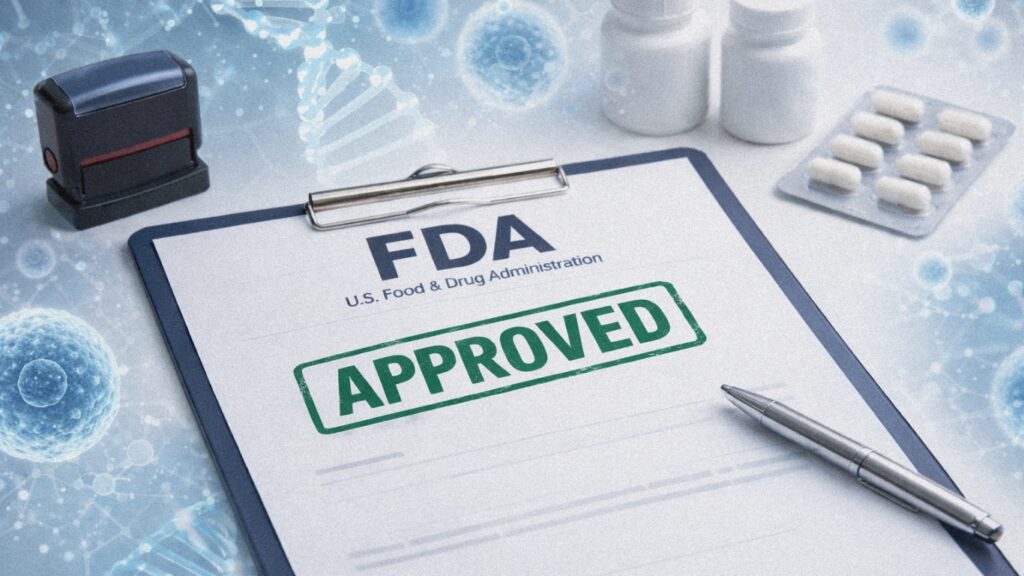
The regulatory waiting game ends today as BioCryst Pharmaceuticals (BCRX) faces afternoon PDUFA decision for pediatric Orladeyo in hereditary angioedema prophylaxis (ages 2-11) — approval would create first oral option replacing painful injectable therapies for children, stock rallied +1.2% Thursday holding support with clean approval potentially triggering rapid repricing toward $8.50 while Complete Response Letter or restrictive label risks retest of $6.00 lows, trading halts possible given binary nature.
AI drug discovery officially enters clinical validation phase: Isomorphic Labs confirmed late Thursday its first AI-designed drug candidates will initiate clinical trials before year-end, marking pivotal “AlphaFold moment” where Google DeepMind’s computational biology prowess translates from protein structure prediction to actual therapeutic molecules in humans — if Phase 1 safety clears, valuation premium for “AI-native” biotechs expected to decouple from traditional drug developers in 2026.
Recursion Pharmaceuticals (RXRX) +2.1% on positive Phase 2 data showing REC-4881 achieved 53% reduction in polyp burden in familial adenomatous polyposis, validating “platform thesis” that AI discovery engines can identify novel uses for existing compounds in completely different diseases — represents critical proof point for NVIDIA partnership and positions Recursion as potential “operating system of drug discovery” capturing tech investor attention seeking “application layer” pharma plays.
Medra closed $52M Series A to deploy AI-driven robots performing wet-lab experiments autonomously, signaling venture capital funding shift toward infrastructure of automated science (not just molecules) — for CROs and Big Pharma R&D leaders represents future of OPEX reduction as “physical AI” replacing manual pipetting reduces human error and accelerates throughput 10x.
Market dynamics: XBI +0.5% Thursday consolidating post-CPI gains, BCRX +1.2% holding support into PDUFA, RXRX +2.1% on AI validation, Amgen approved for Uplizna gMG expansion (stock muted as expected), tech capital rotation into “deep tech” AI biotech providing sector floor.
Reader poll results: BioCryst pediatric standard of care adoption split — “Yes” (35.3%) narrowly edged “Niche” (33.1%) with “No” at 31.6%, revealing 65% skepticism that oral convenience alone guarantees adoption given payer barriers and clinical caution. New poll: Should AI-designed drugs command higher valuation multiples?
The synthesis: AI drug discovery graduating from computational promise to clinical reality as Isomorphic initiates trials and Recursion validates platform approach, while BioCryst PDUFA decision today represents traditional pharma binary catalyst — convergence of “deep tech” capital rotation and regulatory catalysts creates dual opportunity set for investors navigating both AI infrastructure build-out and conventional biotech event-driven positioning.
PDUFA Day: BioCryst Verdict Expected This Afternoon
Pediatric Orladeyo Decision Represents Biggest Binary Event for HAE Management
BioCryst Pharmaceuticals (BCRX) faces PDUFA decision today for pediatric Orladeyo (berotralstat) in hereditary angioedema prophylaxis for children ages 2-11, with FDA announcement expected afternoon session creating high-volatility trading environment where halts possible given binary nature of approval vs. Complete Response Letter outcome.
The regulatory catalyst:
What’s at stake:
- First oral HAE prophylaxis for pediatrics: Current options all require injections (subcutaneous or IV); Orladeyo capsule once-daily would transform treatment convenience
- Addressable population: ~1,000-1,500 U.S. children ages 2-11 with HAE requiring prophylaxis (subset experiencing ≥2 attacks monthly)
- Peak sales expansion: Pediatric approval adds $250-500M potential to adult franchise (~$200-300M current annual sales)
- Quality of life impact: Eliminates injection anxiety, simplifies family adherence, enables school-friendly medication routine
Stock positioning ahead of decision:
Pre-PDUFA run-up:
- +4.2% Wednesday: Initial run-up as PDUFA approached
- +1.2% Thursday: Holding support, consolidating gains
- Total run-up: ~5-6% over two days suggests approval expectation largely priced in
Volatility expectations:
- Options pricing ±15% move: Market anticipates $6.50-$8.50 range depending on outcome
- Trading halts possible: SEC circuit breakers may trigger if stock moves >10% rapidly on news
- Afternoon timing: FDA typically releases PDUFA decisions 4:00-6:00 PM ET (after market close or final hour)
Decision Scenarios and Stock Implications
Bull Case: Clean Approval (No REMS, Broad Label) — Target $8.50 (+25-30%)
What “clean approval” means:
- Ages 2-11 indication approved: Full pediatric population, no age restrictions within range
- No REMS (Risk Evaluation and Mitigation Strategy): No restricted distribution, no special monitoring requirements beyond standard label
- Label consistent with adult version: GI side effects (diarrhea, nausea) listed but no boxed warnings
- Capsule formulation approved: Standard capsule (not requiring special compounding for young children who can’t swallow pills)
Why this drives to $8.50:
- Market cap expansion justified: Pediatric approval doubles addressable population; peak sales $600-900M (adult + pediatric) vs. $200-300M adult-only
- Commercial launch immediate: No REMS restrictions mean standard specialty pharmacy distribution; launch within weeks
- Physician enthusiasm high: Pediatricians and pediatric hematologists have been waiting for oral option; pent-up demand
- Payer coverage likely: Rare disease, FDA-approved indication, clear medical necessity creates favorable reimbursement environment
Base Case: Approval with Minor Restrictions — Target $7.50 (+10-15%)
What “minor restrictions” might include:
- Age limitation: E.g., approved for ages 6-11 only (excluding youngest children 2-5 who may struggle with capsule swallowing)
- Label warnings: Prominent GI side effect warnings or monitoring recommendations (but not boxed warning)
- Dosing complexity: Weight-based dosing requiring careful calculation vs. standard adult dose
- Post-marketing commitments: FDA requires additional pediatric studies post-approval (standard for rare diseases)
Why this tempers upside:
- Smaller addressable population: If ages 6-11 only, cuts pediatric market by ~40-50%
- Physician hesitation: Label warnings or complex dosing may slow adoption vs. injectable competitors
- Still positive: Approval is approval; commercial opportunity exists even if smaller than bulls hoped
Bear Case: Complete Response Letter (CRL) or Major Restrictions — Target $6.00 (-10-15%)
What triggers CRL:
- Safety concerns: FDA identifies pediatric-specific safety signals (e.g., growth impairment, developmental issues) not seen in adults
- Efficacy insufficient: FDA concludes extrapolation from adult data inadequate; requires dedicated pediatric efficacy trial
- Manufacturing issues: CMC (chemistry, manufacturing, controls) deficiencies in pediatric formulation
- Labeling disputes: FDA and BioCryst unable to agree on appropriate warnings, contraindications
What constitutes “major restrictions”:
- Boxed warning: Black box for serious adverse events (would severely limit prescribing)
- REMS with restricted distribution: Only specialty pharmacies, mandatory patient/physician enrollment, frequent monitoring
- Very narrow indication: E.g., only for children who have failed all injectable options (last-line therapy)
Why this drops to $6.00:
- Peak sales slashed: CRL delays launch 12-18+ months; restricted approval makes pediatric market <$100M
- Adult franchise questioned: If FDA found pediatric safety concerns, may raise questions about long-term adult safety
- Cash burn concerns: Delay forces additional studies, depletes cash runway, potential need for dilutive financing
Clinical Practice Implications
For pediatricians and pediatric allergists/immunologists:
If approved (preparing for launch):
- Patient identification: Review HAE patient panels, identify children ages 2-11 with ≥2 attacks monthly qualifying for prophylaxis
- Family counseling: Educate families about oral option availability, benefits (no injections), risks (GI side effects), and transition process from injectables
- Insurance pre-authorization: Initiate prior authorization immediately (expect 4-8 week approval process given rare disease specialty drug)
- Monitoring protocol: Baseline weight, growth parameters, GI symptom assessment; follow-up every 3 months initially
If CRL (managing expectations):
- Continue injectable therapies: Lanadelumab (Takhzyro), C1-INH products remain standard of care
- Explain delay: Counsel families that FDA requested additional data; oral option still possible in future but timeline uncertain
- Clinical trial opportunities: If BioCryst runs additional pediatric study, consider enrolling appropriate patients
Patient selection for Orladeyo (if approved):
Ideal candidates:
- Children ages 2-11 with confirmed HAE diagnosis (C1 esterase inhibitor deficiency)
- High attack burden (≥2 attacks monthly) despite on-demand treatment
- Injection-averse families struggling with adherence to lanadelumab or C1-INH infusions
- Ability to swallow capsules (may exclude very young children ages 2-4)
- No contraindications (severe GI disease, malabsorption disorders)
Who may still prefer injectables:
- Very severe HAE (frequent life-threatening laryngeal attacks) where maximum efficacy needed — lanadelumab provides ~70-80% attack reduction vs. Orladeyo ~44%
- Children unable to swallow capsules (too young or developmental delays)
- Families with established successful injectable routine (adherent, satisfied, reluctant to change)
Investment Positioning
Pre-decision (today, before announcement):
NOT recommended:
- Avoid initiating new positions: Stock has already run up 5-6%; much of approval expectation priced in
- Too late to position: If considering binary play, should have entered Monday/Tuesday when stock at $6.00-6.50
If already positioned:
- Hold through decision: If risk tolerance appropriate for binary event, see through decision
- Consider partial profit-taking: If want to reduce risk, sell 30-50% before decision, let rest ride
Post-decision (immediately after FDA announcement):
On clean approval (stock gaps to $8.50):
- Don’t chase: +25-30% gap-up will already reflect approval; buying into gap risky
- Wait for consolidation: Stock typically pulls back 10-20% in days following initial gap-up as early longs take profits
- Re-enter on dip: If stock retraces to $7.50-8.00, becomes attractive entry for commercial launch momentum
On approval with restrictions (stock at $7.50):
- Evaluate restrictions: Read label carefully; if restrictions minor (age limitation only), stock may be attractive
- Near-term hold: Allow market to digest implications over 24-48 hours before deciding
- Long-term view: Even restricted approval creates revenue stream; $7.50 may be fair value for base case
On CRL (stock drops to $6.00):
- Read CRL carefully: If CRL is due to manufacturing/labeling (resolvable), stock likely oversold at $6.00
- If safety concerns: Wait for management call/press release clarifying FDA’s specific concerns before considering entry
- Recovery timeline: CRLs typically take 12-18 months to resolve; if long-term bull, $6.00 may be attractive entry but requires patience
The AI “Clinical” Pivot: Isomorphic Labs Enters Human Trials
Google DeepMind Spinout Initiates First AI-Designed Drug Candidates Before Year-End
Isomorphic Labs confirmed late Thursday its first AI-designed therapeutic candidates will enter clinical trials before December 31, marking pivotal transition from computational biology achievements (AlphaFold protein folding) to actual drug development in humans — represents “so what?” answer to AlphaFold skeptics questioning whether structural biology predictions translate to clinical medicines.
The significance:
Why this matters beyond hype:
- AlphaFold solved protein structure prediction: DeepMind’s AlphaFold (2020) revolutionized structural biology, predicting 3D protein structures from amino acid sequences with near-experimental accuracy
- Skeptics asked “so what?”: Knowing protein structure doesn’t automatically yield drugs; discovery requires understanding binding, pharmacokinetics, toxicity, efficacy
- Isomorphic Labs founded 2021: Google spun out Isomorphic to apply AI/ML to actual drug discovery (not just structure prediction)
- Clinical trials are proof point: If AI-designed molecules clear Phase 1 safety and show preliminary efficacy signals, validates entire approach
What “AI-designed” means:
The drug discovery process Isomorphic claims to have AI-automated:
- Target identification: AI analyzes disease biology data identifying proteins to modulate
- Hit discovery: AI screens billions of virtual compounds predicting which bind target
- Lead optimization: AI designs chemical modifications improving potency, selectivity, drug-like properties
- Preclinical predictions: AI predicts ADME (absorption, distribution, metabolism, excretion), toxicity, off-target effects
Traditional timeline vs. AI-accelerated:
- Traditional discovery: 3-5 years from target identification to IND (Investigational New Drug application)
- Isomorphic’s claimed timeline: ~18-24 months (60% faster)
- Cost savings: Traditional discovery ~$100-200M per asset; AI purportedly reduces to $30-50M
Clinical Practice Implications
What AI drug discovery means for physicians:
IF Isomorphic’s assets succeed in clinic:
- More drugs reach patients faster: Compressed timelines mean diseases currently lacking treatments get therapies sooner
- Potentially lower drug costs: Reduced R&D costs could translate to lower pricing (though pharma pricing is complex, not purely cost-based)
- Novel targets accessible: AI can design drugs for “undruggable” targets traditional medicinal chemistry struggles with
Skepticism warranted:
- Phase 1 safety doesn’t prove concept: Clearing Phase 1 (safety in healthy volunteers) is lowest bar; efficacy in patients (Phase 2/3) is real test
- AI hype cycle: Many AI drug discovery companies have made bold claims; few have delivered approved drugs
- “Computer says” doesn’t replace biology: In vitro and in silico predictions often fail to translate in vivo (living organisms are complex)
For patients and families:
What to tell patients asking about “AI drugs”:
- “AI is being used to help discover new medications faster and potentially find treatments for diseases that currently lack options”
- “These are still experimental; AI-designed drugs must go through the same rigorous FDA testing as traditional drugs”
- “If clinical trials succeed over next 3-5 years, you may see more treatment options becoming available”
- “Don’t delay proven treatments waiting for AI drugs; participate in trials if eligible and interested”
Regulatory & Development Insights
FDA perspective on AI-designed drugs:
Current FDA stance:
- Agnostic to discovery method: FDA evaluates safety and efficacy; doesn’t care whether drug discovered by medicinal chemist or AI algorithm
- No special pathway: AI-designed drugs follow same IND/NDA process as conventional drugs
- Data requirements identical: Preclinical toxicology, pharmacokinetics, manufacturing quality, clinical safety/efficacy all required regardless of discovery method
Potential future considerations:
- Explainability concerns: If AI is “black box” (can’t explain why molecule predicted to work), FDA may want additional mechanistic data
- Toxicity prediction validation: FDA may eventually require companies prove their AI toxicity predictions are reliable before accepting reduced animal testing
- Accelerated pathways: If AI demonstrably reduces discovery risk (higher Phase 1→2→3 success rates), FDA might create incentives
Isomorphic’s competitive positioning:
AI drug discovery landscape crowded:
- Recursion Pharmaceuticals (RXRX): Public, AI discovery platform, NVIDIA partnership, multiple assets in clinic
- Exscientia (EXAI): Public, AI-designed cancer drugs in Phase 1/2
- Schrodinger (SDGR): Public, computational chemistry platform, collaborations with Bristol Myers Squibb, Takeda
- Relay Therapeutics (RLAY): Public, protein motion analysis for drug design
- Dozens of private AI biotechs: Insitro, Generate Biomedicines, Iktos, many others
Isomorphic’s differentiation:
- DeepMind pedigree: AlphaFold credibility, world-class AI talent, Google resources
- Capital advantage: Google parent Alphabet has unlimited capital vs. venture-backed competitors burning cash
- Partnerships: Eli Lilly partnership (announced 2022, undisclosed terms); Novartis partnership (2023, up to $3B potential value)
- Risk: No public disclosures on asset details, timelines, indications; opacity vs. public comps
Investment Implications
Isomorphic Labs (private, not investable directly):
How to get exposure:
- Alphabet (GOOGL/GOOG): Isomorphic is Alphabet subsidiary; success accrues to parent (but tiny fraction of $2T market cap)
- Partner stocks: Eli Lilly, Novartis partnerships mean successful Isomorphic drugs generate royalties/milestones
- Indirect plays: NVIDIA (chips powering AI compute), AI biotech ecosystem broadly
Valuation implications if clinical success:
Precedent private AI biotech valuations:
- Insitro: Raised at ~$3B valuation (no drugs in clinic yet, partnership with Gilead)
- Generate Biomedicines: Raised at ~$2B valuation (preclinical stage, partnerships with Amgen, Novartis)
- Relay Therapeutics: IPO’d at ~$2B valuation (early clinical assets)
Isomorphic potential valuation:
- If Phase 1 succeeds: $5-10B valuation likely (Google backing, pharma partnerships, clinical validation)
- If Phase 2 shows efficacy: $10-20B valuation possible (de-risked assets, acquirer interest from Big Pharma lacking AI capabilities)
- IPO vs. acquisition: Google may IPO Isomorphic (like DeepMind considered spinning out) or sell to pharma giant (Pfizer, Merck, others desperate for innovation)
Recursion Validates AI Platform: FAP Phase 2 Success
REC-4881 Achieves 53% Polyp Burden Reduction, Stock +2.1%
Recursion Pharmaceuticals (RXRX) rallied 2.1% Thursday following positive Phase 2 data showing REC-4881 achieved 53% reduction in polyp burden in familial adenomatous polyposis (FAP) patients — validating “platform thesis” that AI discovery engines can identify novel uses for existing compounds in completely different diseases and positioning Recursion as potential “operating system of drug discovery.”
The data and disease context:
Familial adenomatous polyposis (FAP):
- Genetic colon cancer syndrome: Inherited mutation in APC gene causes hundreds-to-thousands of polyps in colon/rectum
- Inevitable cancer: If untreated, polyps progress to colorectal cancer by age 40 with near 100% penetrance
- Current management: Prophylactic colectomy (surgical colon removal) in teens/20s is standard of care; medical management limited
- Alternative: NSAIDs (sulindac, celecoxib) reduce polyp burden ~30-40% but don’t prevent cancer; used to delay surgery
REC-4881 mechanism and data:
- MEK inhibitor: REC-4881 inhibits MEK (MAPK/ERK kinase), blocking signaling pathway promoting polyp growth
- 53% polyp reduction: Exceeds NSAID benchmark (30-40%); clinically meaningful if sustained
- Safety: MEK inhibitors have known toxicities (rash, diarrhea, cardiac issues); tolerability in FAP patients key question (data not fully disclosed)
Why This Validates AI Platform Thesis
The “Platform Thesis” explained:
Traditional drug discovery model:
- Target-centric: Identify disease target (e.g., MEK in cancer), screen compounds, optimize, test in single indication
- One drug, one disease: Each discovery program starts from scratch
- High failure rate: ~90% of drugs entering Phase 1 fail to reach approval
Recursion’s AI platform model:
- Phenotypic screening: Test compounds on cellular disease models, measure effects using computer vision/AI
- Disease-agnostic: Same compound can be tested across hundreds of diseases simultaneously
- Repurposing at scale: AI identifies existing compounds (approved drugs, clinical-stage failures, tool compounds) with unexpected activity in new diseases
REC-4881 demonstrates model working:
The discovery story:
- Originally: MEK inhibitors developed for cancer (melanoma, NSCLC); approved drugs exist (trametinib, cobimetinib)
- Recursion AI identified: MEK inhibition reduces polyp formation in FAP cellular models
- Hypothesis: Aberrant MAPK signaling in APC-mutant cells drives polyp growth; MEK inhibition could treat FAP (non-oncology use)
- Clinical validation: Phase 2 data confirms hypothesis; 53% polyp reduction
Why this matters for platform:
- Proves repurposing works: Taking cancer drug mechanism, applying to genetic GI disease, achieving efficacy
- Faster, cheaper: Didn’t design new molecule; leveraged existing MEK inhibitor knowledge; shortened timeline from ~5 years to ~2 years
- Scalable: If works for FAP, same approach applicable to thousands of diseases; one platform, many drugs
Clinical Practice Implications
For gastroenterologists managing FAP patients:
Current challenges:
- Colectomy timing dilemma: Operate too early (teens), patient loses colon unnecessarily young; too late, cancer develops
- Medical management insufficient: NSAIDs (sulindac, celecoxib) reduce polyps modestly but don’t eliminate cancer risk; patients still need surgery
- Quality of life: Living without colon requires permanent ileostomy or J-pouch reconstruction; major QOL impact
If REC-4881 approved (optimistic scenario):
Potential paradigm shift:
- Delay colectomy: If 53% polyp reduction sustained long-term, could delay surgery from late teens to late 20s/30s (extra decade of normal GI function)
- Bridge to surgery: Use REC-4881 during adolescence/young adulthood, perform colectomy later when patient emotionally/socially ready
- Post-colectomy use: Even after colon removal, duodenal polyps remain (FAP affects upper GI too); REC-4881 could manage duodenal disease
Patient counseling:
- “REC-4881 is experimental MEK inhibitor showing ability to reduce polyp burden by about 50%”
- “Does NOT eliminate cancer risk; surgery remains curative treatment”
- “Potential use: Delay surgery by several years while managing polyps medically, giving you more time with intact colon”
- “Side effects: Skin rash, diarrhea, potential cardiac effects; ongoing monitoring required”
Regulatory & Development Insights
Path to approval:
FDA considerations for FAP indication:
- Orphan disease: FAP affects ~20,000-30,000 U.S. patients; qualifies for orphan drug designation (incentives, exclusivity)
- Endpoint question: What constitutes approvable endpoint?
- Polyp burden reduction: FDA has accepted this for NSAID approvals (sulindac, celecoxib) but ultimately cancer incidence matters
- Cancer prevention: Requires very long trials (10+ years follow-up) or use of polyp reduction as surrogate
- Accelerated approval pathway: FDA could grant accelerated approval based on polyp reduction with confirmatory trial demonstrating cancer prevention
Development timeline:
- Phase 2 completed: Current results
- Phase 2b/3 needed: Larger trial (100-200 patients) confirming efficacy, durability (2-3 years)
- Regulatory submission: 2026-2027 (optimistic)
- Approval: 2027-2028 earliest
MEK inhibitor safety profile:
Known toxicities from cancer use:
- Dermatologic: Acneiform rash (60-80% incidence), dry skin, nail changes
- Gastrointestinal: Diarrhea (40-60%), nausea
- Ocular: Blurred vision, retinal detachment (rare but serious)
- Cardiac: LV dysfunction, hypertension (rare, <5%)
FAP-specific considerations:
- Chronic dosing: Cancer patients take MEK inhibitors for months; FAP patients would need years/decades
- Tolerability critical: If side effects intolerable, patients will discontinue; drug fails despite efficacy
- Dose optimization: May need lower doses for FAP (chronic prevention) vs. cancer (acute treatment)
Investment Implications
Recursion Pharmaceuticals (RXRX) +2.1%:
Platform validation significance:
- Proves model: FAP success demonstrates AI platform can discover novel indications for existing mechanisms
- Pipeline multiplication: If one program (MEK in FAP) works, suggests platform can generate dozens more
- NVIDIA partnership credibility: NVIDIA invested in Recursion specifically for AI drug discovery; FAP data validates partnership thesis
Valuation reassessment:
- Previous market cap: ~$1-1.5B (reflecting skepticism about AI platform delivering real drugs)
- Post-FAP data: Valuation should increase to ~$2-3B (platform proven, multiple shots on goal)
- Target price potential: If 2-3 additional programs show Phase 2 efficacy over next 12-24 months, $5-8B market cap achievable
Positioning:
Bull case:
- Accumulate on dips: +2.1% rally modest given significance; pullbacks to $6-7 are buying opportunities
- Long-term hold: Platform thesis takes 3-5 years to fully play out; need patience
- Catalyst timeline:
- Q1-Q2 2025: Additional pipeline readouts (oncology, rare disease programs)
- 2025-2026: Phase 2b/3 FAP trial initiation
- 2027-2028: First approval (FAP or other indication)
Bear case:
- Cash burn: Recursion burns ~$200-250M annually; need financing within 12-18 months
- Dilution risk: Equity raises will dilute existing shareholders
- Platform unproven at scale: FAP is one success; need multiple wins to validate platform
Medra Raises $52M: The “Self-Driving Lab” Automation Wave
AI-Powered Robotics Accelerate Design-Make-Test Cycles 10x
Medra closed $52M Series A to deploy AI-driven laboratory robots performing wet-lab experiments autonomously, signaling venture capital funding shift toward infrastructure of automated science (not just molecules) — for CROs and Big Pharma R&D heads represents future of OPEX reduction as “physical AI” replacing manual pipetting reduces human error and accelerates design-make-test iteration cycles 10x.
What “self-driving labs” means:
Traditional drug discovery wet-lab workflow:
- Design: Medicinal chemist designs compounds to synthesize
- Make: Synthetic chemist manually synthesizes compounds (days-to-weeks per compound)
- Test: Biologist manually tests compounds in assays (cell viability, target binding, etc.)
- Analyze: Scientist interprets results, decides next compounds to make
- Repeat: Iterate through cycles until lead compound identified (months-to-years)
Medra’s AI-robotics automation:
- Design: AI algorithm generates compound designs based on prior data
- Make: Robot synthesizes compounds autonomously (hours per compound, parallel processing)
- Test: Robot performs assays autonomously (high-throughput, 96-well/384-well plates)
- Analyze: AI interprets results, generates next compound designs
- Repeat: Autonomous iteration 24/7 (no human in loop until lead identified)
The 10x acceleration claim:
How automation speeds discovery:
- Parallelization: Robots test hundreds of compounds simultaneously; humans test tens
- 24/7 operation: Robots work nights/weekends; humans work 40-50 hours/week
- Error reduction: Manual pipetting has ~5-10% error rate; robotic pipetting ~0.1%
- Design-make-test-analyze cycle: Traditional 2-4 weeks per cycle; automated 2-4 days per cycle
- Net result: 10x throughput improvement (from concept to lead compound)
Clinical Practice Implications
Indirect impact on clinical medicine:
Faster drug discovery → more therapies:
- Pipeline expansion: Pharma companies can pursue more targets simultaneously; diseases currently lacking therapies get R&D attention
- Orphan diseases benefit most: Small patient populations couldn’t justify manual discovery economics; automation makes viable
- Cost reduction potential: Lower R&D costs could (theoretically) reduce drug pricing pressure, though economics complex
For hospital systems and academic medical centers:
Research infrastructure evolution:
- Core facilities: University/hospital research cores adopting automation (flow cytometry, sequencing already automated; wet-lab chemistry next)
- Translational research: Academic physicians collaborating with AI/robotics labs can accelerate bench-to-bedside timelines
- Training: Next-generation scientists need computational/robotics skills, not just pipetting technique
Investment Implications
Medra (private) Series A:
Why VCs funding lab automation:
- Picks and shovels: Rather than betting on which drug succeeds, bet on infrastructure enabling all drug discovery
- Recurring revenue: Lab automation is SaaS model (subscription fees, consumables); predictable cash flows vs. binary drug risk
- Large TAM: Every pharma company, biotech, CRO, academic lab is potential customer; $10-20B addressable market
Comparable companies:
- Strateos (acquired by Roche 2021): “Cloud lab” automation; Roche paid ~$100M
- Emerald Cloud Lab: Private, ~$500M valuation; lab-as-a-service model
- Benchling: Lab software (not robotics); IPO’d ~$6B valuation (now ~$4B); shows appetite for lab infrastructure investments
Broader AI biotech infrastructure theme:
Investment opportunities:
- NVIDIA (NVDA): Chips powering AI compute for drug discovery (Recursion partnership, others)
- Lab automation hardware: Tecan, Hamilton Robotics (private), others making pipetting robots
- Software platforms: Benchling, Dotmatics (private), CDD Vault – lab data management systems
- Cloud compute: AWS, Google Cloud, Microsoft Azure all competing for pharma AI workloads
Reader Poll Results: BioCryst Standard of Care Adoption Skepticism
65% Remain Skeptical Despite “Yes” Narrow Victory (35.3%)
Yesterday’s poll asking whether BioCryst oral Orladeyo would become pediatric HAE standard of care revealed split verdict:
Results:
- Yes — Injections are burden; oral is future: 35.3% (Winner by narrow margin)
- Niche — Only for severe/refractory cases: 33.1%
- No — Payers will force cheaper generics/injectables first: 31.6%
The Takeaway: Convenience ≠ Guaranteed Adoption
Why 65% skepticism despite oral advantage:
“Niche” voters (33.1%) reasoning:
- Efficacy matters more than convenience: Lanadelumab (Takhzyro) provides 70-80% attack reduction vs. Orladeyo 44%; for severe disease, maximum efficacy trumps oral route
- Clinical conservatism: Pediatricians may prefer established injectable with longer track record over new oral
- Reserve oral for failures: Try injectable first (standard of care), switch to oral only if adherence problems
“No” voters (31.6%) reasoning:
- Cost barriers: Orladeyo ~$500,000 annually; insurers will require step therapy (try cheaper options first)
- Prior authorization hurdles: Payers make oral approval process so burdensome that prescribing injectables easier
- Generic competition: Once lanadelumab patent expires (~2030s), generic competition makes it far cheaper than branded Orladeyo
What this means for BioCryst commercial launch:
Slower uptake likely:
- Not blockbuster launch: Poll suggests oral convenience insufficient to drive rapid adoption
- Educational effort required: BioCryst needs convince physicians AND payers of value proposition
- Peak sales modest: Even with approval, may take 3-5 years to reach $300-400M pediatric sales (vs. bulls expecting $500M+)
New Poll: The “AI Premium” Valuation Question
This week’s question:
With Isomorphic and Recursion moving AI assets into the clinic, do you believe “AI-Designed” drugs should command a higher valuation multiple?
Options:
A) Yes — They have higher probability of success (PoS) and lower R&D costs.
- Thesis: AI reduces failure rate (higher Phase 1→2→3 success); faster timelines; lower costs → all justify premium valuations
- Reasoning: Market should pay more for de-risked pipelines
B) No — A drug is a drug. The FDA doesn’t care how you found it.
- Thesis: Clinical risk identical regardless of discovery method; efficacy and safety are what matter
- Reasoning: Valuation should reflect clinical stage, indication, market size (not discovery method)
C) Only if they prove clinical efficacy first (Phase 2 data).
- Thesis: Wait-and-see approach; reserve judgment until AI drugs demonstrate Phase 2 efficacy
- Reasoning: Too early to assign premium based on computational predictions alone
Bottom Line: AI Biotech Enters Clinical Reality While BioCryst Binary Looms
BioCryst pediatric Orladeyo PDUFA decision this afternoon represents single biggest binary event for pediatric HAE management — approval creates first oral prophylaxis option replacing painful injections for children ages 2-11, stock positioned at +5-6% run-up suggesting clean approval expectation largely priced in with ±15% volatility anticipated ($6.50-$8.50 range) depending on whether label clean, restricted, or Complete Response Letter issued.
AI drug discovery graduating from promise to proof as Isomorphic Labs (Google DeepMind spinout) initiates first AI-designed clinical trials before year-end marking pivotal “AlphaFold moment” transition from computational biology achievements to actual therapeutic molecules in humans — if Phase 1 safety clears, valuation premium for “AI-native” biotechs expected to decouple from traditional drug developers in 2026 as tech capital recognizes infrastructure build-out opportunity.
Recursion Pharmaceuticals validates platform thesis with REC-4881 achieving 53% polyp burden reduction in FAP Phase 2 (+2.1% stock reaction), demonstrating AI discovery engines can identify novel uses for existing mechanisms across completely different diseases — positions Recursion as potential “operating system of drug discovery” capturing tech investor attention seeking “application layer” pharma plays beyond semiconductor/infrastructure exposure.
Medra $52M Series A signals VC funding shift toward infrastructure of automated science (AI-powered lab robotics) rather than just molecules, representing “picks and shovels” investment thesis where recurring revenue lab-automation SaaS models de-risk binary drug development outcomes — for pharma R&D heads foreshadows 10x design-make-test cycle acceleration and OPEX reduction as “physical AI” replaces manual wet-lab workflows.
Reader poll reveals commercial realism with 65% skepticism that BioCryst oral Orladeyo becomes pediatric HAE standard of care despite convenience advantages — “Niche” (33.1%) and “No” (31.6%) votes reflecting belief that efficacy advantages (lanadelumab 70-80% reduction vs. Orladeyo 44%) and payer cost barriers will limit adoption despite oral route preference, suggesting slower commercial uptake than bulls anticipate.
For all audiences:
Clinical practitioners: BioCryst approval (if granted) creates oral option for injection-averse pediatric HAE families but expect payer step therapy requirements and clinical conservatism favoring established injectables for severe cases; AI drug discovery acceleration (if validated) means more treatment options reaching clinic faster for currently under-served diseases over 3-5 year horizon.
Industry professionals: Isomorphic clinical entry and Recursion FAP validation represent infrastructure build-out phase for AI biotech where computational predictions must prove clinical translatability — R&D strategies should incorporate AI platform partnerships or internal capabilities as competitive necessity, while lab automation (Medra model) enables OPEX reduction and throughput acceleration for companies scaling discovery operations.
Investors: Manage BioCryst binary volatility (avoid chasing if clean approval drives gap-up, consider post-consolidation entry; if CRL, evaluate FDA concerns before bottom-fishing); position for AI biotech theme (Recursion accumulate on dips toward $6-7, monitor Isomorphic Phase 1 data for sector sentiment catalyst, NVIDIA indirect exposure); recognize infrastructure opportunity (lab automation, compute, software platforms offer recurring revenue models vs. binary drug risk).
The convergence of traditional biotech event catalysts (BioCryst PDUFA) and emerging AI drug discovery clinical validation (Isomorphic trials, Recursion platform proof) creates dual opportunity set — navigate near-term regulatory binaries while positioning for multi-year structural shift toward computational biology infrastructure dominance.