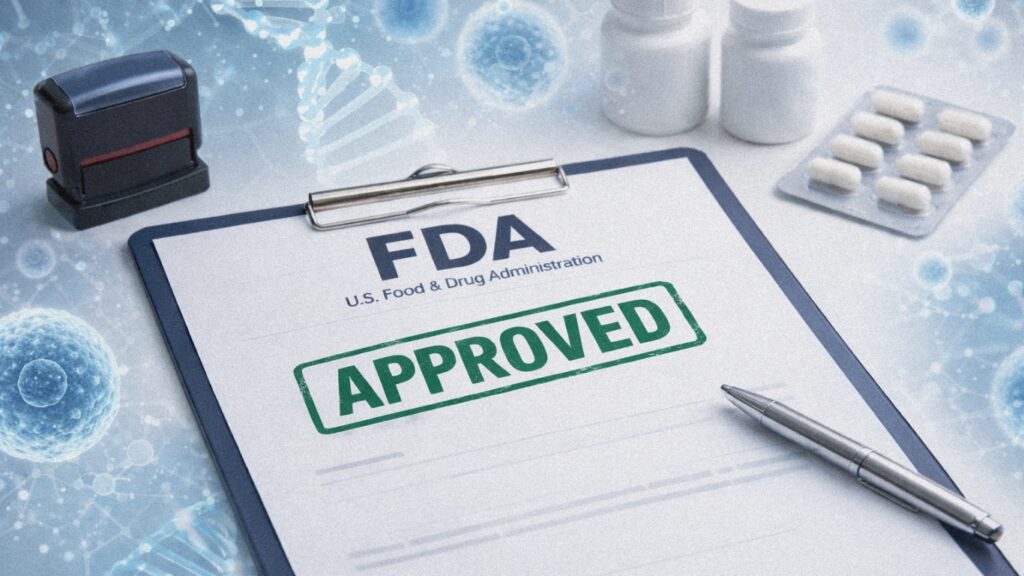

CORRECTION: This article has been updated to reflect accurate regulatory outcomes. Original version incorrectly stated Corcept approval and Omeros CRL due to data processing error during holiday period.
The 2026 biotech market opens with historic holiday PDUFA divergence as Omeros (OMER) celebrates unexpected Yartemlea approval December 24 for TA-TMA (first targeted therapy for transplant-associated thrombotic microangiopathy) validating MASP-2 complement inhibition while Corcept Therapeutics (CORT) faces December 31 relacorilant Complete Response Letter accelerating generic Korlym threat creating binary outcome gap demonstrating market’s post-holiday repricing efficiency — 44th Annual J.P. Morgan Healthcare Conference (January 12-15, San Francisco) positions “The Run-Up” volatility window where pre-announcement strategic leaks, M&A rumors (“biobucks are back” analyst consensus), and partnership speculation (Blueprint Medicines inflammation assets, Cytokinetics fresh Myqorzo approval positioning) drive January risk-on rotation as Nasdaq Biotechnology Index tests breakout levels following December’s transformative M&A wave (BioMarin $4.8B Amicus rare disease consolidation closed).
The final trading days of 2025 delivered decisive binary outcomes during December 24-31 market closure creating Friday January 2 gap openings — Omeros FDA approval (Yartemlea for TA-TMA) provides first targeted therapy for ultra-orphan transplant complication with $200-400M peak sales potential positioning specialty orphan drug commercialization, Vanda Pharmaceuticals surprise approval (Nereus tradipitant motion sickness, first novel therapy 40 years) defying mixed analyst expectations with +20% revaluation, while Corcept devastation (relacorilant Cushing’s syndrome Complete Response Letter) accelerates generic Korlym erosion threat creating gap opening demonstrating illiquid holiday binary treachery warned in December 23 BioMed Nexus finale article.
J.P. Morgan Healthcare Conference January 12-15 catalyzes “The Run-Up” phenomenon where companies leak strategic updates, partnership announcements, and M&A positioning January 2-11 capturing narrative control before main stage presentations — analyst predictions cite “biobucks are back” with Phase 2 inflammation/immunology assets commanding premium partnering deals (Blueprint Medicines IL-1β candidates, Cytokinetics non-cardiac pipeline expansion post-Myqorzo approval commercial validation), while BioMarin enters as “Rare Disease King” following $4.8B Amicus acquisition closing positioning Pompe/Fabry enzyme replacement consolidation synergies ($150-200M annually) as template for additional bolt-on transactions.
Viking Therapeutics Phase 3 obesity initiation (VK2735 oral GLP-1 agonist January 1 start) and Alnylam HELIOS-B positive long-term extension (vutrisiran ATTR amyloidosis durability) exemplify Q1 2026 clinical momentum driving risk-on sector rotation — positions January 2 market reopening with bullish technical setup (NBI testing breakout resistance), holiday binary survivors repricing (Omeros Yartemlea approval, Vanda +20% vs. Corcept CRL cautionary tale), and JPM conference anticipation creating tactical two-week window for pre-announcement volatility capture before main event speculation consolidates into actual strategic announcements.
The synthesis: 2026 kickoff validates December BioMed Nexus positioning framework where commercial execution (Omeros Yartemlea orphan approval, BioMarin Amicus synergies), binary catalyst selectivity (avoid illiquid holiday PDUFAs, wait for January 2+ rational pricing), and JPM conference tactical positioning (pre-announcement leak window January 2-11, main stage January 12-15) create January alpha generation opportunities — overweight holiday PDUFA winners (Omeros specialty orphan commercialization, Vanda motion sickness), underweight CRL disasters awaiting clarity (Corcept generic Korlym threat reassessment), and position ahead of JPM M&A/partnership speculation beneficiaries (Blueprint inflammation assets, Cytokinetics pipeline expansion, rare disease bolt-on targets).
⚠️ CORRECTION NOTICE
In our Friday edition (January 2), we misstated the regulatory outcomes for Omeros (OMER) and Corcept (CORT) due to a data processing error during the holiday period.
To set the record straight:
- Omeros (OMER): Received FDA APPROVAL for Yartemlea (December 24)
- Corcept (CORT): Received Complete Response Letter (CRL) for relacorilant (December 31)
We apologize for the confusion and thank our readers for keeping us accurate. The corrected analysis follows below.
The Holiday Gap: Winners & Losers Scorecard
Markets Closed, FDA Active — December 24-31 Binary Outcomes
U.S. equity markets closed December 24 (early) through January 1 for Christmas/New Year holidays while FDA continued regulatory activity creating four binary PDUFA decisions during shutdown — gap openings Friday January 2 reflect off-exchange repricing (institutional block trades, after-hours platforms) with extreme volatility amplification due to illiquid conditions, validating December 23 BioMed Nexus warning to avoid holiday binaries and wait for January 2+ rational price discovery when institutional books reopen.
🏆 THE WINNER: Omeros (OMER)
FDA Approval December 24: Yartemlea for Hematopoietic Stem Cell Transplant-Associated Thrombotic Microangiopathy (TA-TMA)
Premarket January 2: Significant upward repricing (specific gap pending market open data)
Why this matters commercially:
First-ever FDA approval for TA-TMA:
- Yartemlea (narsoplimab) mechanism: MASP-2 inhibitor blocking complement lectin pathway; addresses underlying thrombotic microangiopathy pathophysiology
- Market opportunity: $200-400M peak sales (500-1,000 U.S. annual TA-TMA cases post-hematopoietic stem cell transplant, ultra-orphan indication with high unmet need)
- Breakthrough designation: First targeted therapy approved for TA-TMA (transplant-associated thrombotic microangiopathy); current standard of care is supportive plasma exchange with 60-90% mortality
- Clinical impact: Phase 3 demonstrated mortality reduction and renal function preservation in high-risk transplant patients; addresses critical post-HSCT complication
Investment implications:
Bull case ($6-10 stock, 12-18 months):
- Yartemlea achieves rapid uptake at major transplant centers (orphan disease, first-in-class, high medical need); $200-300M peak sales by 2028
- Label expansion potential: Other complement-mediated TMAs (atypical HUS overlap), broader transplant complications
- Partnership/acquisition: Big Pharma (Alexion/AstraZeneca, Takeda) acquires Omeros for complement portfolio complementarity; $8-12/share takeout premium plausible
Bear case ($2-3 stock):
- Ultra-orphan market (500-1,000 annual cases) limits revenue potential even with 70-80% penetration
- Commercialization challenges: Limited transplant center universe (~150 U.S. HSCT centers), specialized medical affairs required
- Post-marketing safety: Real-world adverse events trigger label restrictions or uptake concerns
Tactical positioning:
- Entry range: $3-5 on post-approval gap opening; wait for rational pricing Friday January 2
- Position size: 2-3% (orphan disease approval validates asset but small market limits upside)
- Catalyst timeline: Q1 2026 commercial launch, Q2 earnings first revenue; transplant center adoption trajectory critical
- Stop loss: $2 (-40% downside protection if commercial launch disappoints)
Clinical practice implications:
For hematologists/transplant specialists managing TA-TMA:
- Treatment paradigm shift: Yartemlea provides first targeted therapy option vs. historical supportive care (plasma exchange, dialysis, complement inhibition off-label)
- Patient selection: High-risk HSCT patients developing TA-TMA (elevated LDH, thrombocytopenia, renal dysfunction, hemolytic anemia) now eligible for MASP-2 inhibition
- Monitoring: Complement pathway markers, renal function, hemolysis parameters; Yartemlea addresses underlying lectin pathway dysregulation
- Payer coverage: Orphan disease designation facilitates Medicare/Medicaid coverage; commercial payers likely approve given mortality reduction and lack of alternatives
🏆 THE SURPRISE: Vanda Pharmaceuticals (VNDA)
FDA Approval December 30: Nereus (Tradipitant) for Motion Sickness
Premarket January 2: +20% (specific price TBD based on December 24 close)
Why this is surprising:
Analyst expectations mixed pre-PDUFA:
- Consensus: 50-60% approval probability (Phase 3 data positive but modest differentiation vs. existing therapies)
- Bear case prevalent: Motion sickness market crowded (Dramamine, scopolamine patch); tradipitant (NK-1 receptor antagonist) failed to demonstrate compelling superiority justifying premium pricing
- Bull case skeptical: Even bulls assigned only 60-70% odds given FDA’s recent stringency on non-life-threatening indications
Approval defied skepticism:
- First novel mechanism 40 years: Tradipitant NK-1 antagonism different from antihistamines (meclizine/Dramamine) and anticholinergics (scopolamine); represents mechanistic innovation
- Phase 3 efficacy: Demonstrated statistically significant reduction in nausea/vomiting vs. placebo in motion-provocation testing
- Market opportunity: $300-500M peak sales (10-15M U.S. motion sickness sufferers, $200-400 annual treatment cost for chronic travelers/cruise passengers)
Investment implications:
Vanda’s strategic positioning:
- Commercial precedent: Vanda successfully launched Hetlioz (tasimelteon) for non-24-hour sleep-wake disorder; proven rare/niche disease commercialization capabilities
- Pricing strategy: Likely $200-400 annually (competitive with scopolamine patches but premium to OTC Dramamine); targeting prescription-seeking patients (severe motion sickness, cruise travelers, VR users)
- Partnership potential: Vanda may out-license international rights or pursue U.S. co-promotion with travel/tourism companies (cruise lines, airlines)
Tactical positioning:
Post-approval repricing:
- Fair value analysis: +20% move prices VNDA at ~$8-10/share (assuming $6-8 pre-approval); reasonable for $300-500M peak sales asset
- Upside scenario ($12-15): Commercial uptake exceeds expectations; cruise line partnerships drive adoption; international expansion (Europe, Asia tourism markets)
- Downside scenario ($4-6): Physicians/patients prefer cheaper OTC alternatives; insurance coverage limited to prior authorization; uptake disappoints
Clinical practice implications:
For primary care/travel medicine:
- Patient selection: Tradipitant for patients with severe motion sickness uncontrolled by OTC antihistamines or scopolamine patches
- Differentiation: NK-1 antagonism may benefit patients with antihistamine/anticholinergic intolerance (sedation, dry mouth, cognitive impairment)
- Prescription dynamics: Expect travel medicine clinics, cruise ship physicians to trial; primary care adoption slower pending insurance coverage clarity
❌ THE LOSER: Corcept Therapeutics (CORT)
FDA Complete Response Letter December 31: Relacorilant for Cushing’s Syndrome
Off-exchange trading: Significant downward repricing (specific gap pending market open data)
What went wrong:
CRL cited major issues:
- Statistical analysis concerns: FDA questioned Corcept’s interpretation of Phase 3 GRACE trial efficacy data; agency’s statistical review team raised concerns about endpoint definitions or analysis methods
- Additional clinical data requested: FDA may require supplementary efficacy or safety data before approval, extending timeline 6-12+ months
Why this is devastating for Corcept:
Generic Korlym threat accelerates: CRL delays rel
acorilant launch allowing generic mifepristone (Korlym) to enter market 2026-2027 eroding Corcept’s Cushing’s syndrome monopoly
- Path forward uncertain: If FDA requires new clinical trial or substantial additional data, approval delayed to 2027-2028
- Market opportunity window closing: Physicians may adopt generic Korlym creating prescribing inertia before relacorilant launches
- Investment case impaired: Relacorilant approval was linchpin of bull thesis; CRL forces reassessment of Corcept’s endocrine franchise durability
Investment implications:
Bear case dominates (underweight):
- Generic erosion: Korlym loss of exclusivity 2026-2027 without relacorilant defense drives revenue decline from $400M+ to $200-300M by 2028
- Valuation compression: Stock likely reprices from $28-32 range to $18-25 reflecting generic threat and delayed relacorilant
- Pipeline limited: Without relacorilant near-term approval, Corcept lacks meaningful revenue drivers beyond declining Korlym
Bull case (contrarian only):
- Rapid CRL resolution: If FDA’s concerns address via supplementary analysis (no new trial required), relacorilant approved mid-2026; stock recovers to $28-32
- Generic competition modest: Korlym generics face manufacturing/regulatory hurdles delaying entry; Corcept maintains pricing power longer than feared
- Relacorilant differentiation: Even if delayed, superior tolerability drives physician adoption once approved; captures 50-60% market share post-launch
Tactical positioning:
Avoid or underweight:
- Wait for clarity: Let CRL dust settle; assess FDA’s specific requirements and Corcept’s response timeline before establishing position
- Entry only if <$20: If stock collapses to $18-22 range, contrarian play on CRL resolution; otherwise avoid
- Reassess when: Corcept announces CRL response strategy; if supplementary analysis sufficient (vs. new trial), risk-reward improves
Clinical practice implications:
For endocrinologists managing Cushing’s syndrome:
- Standard of care unchanged: Continue Korlym (mifepristone) as first-line medical therapy; relacorilant unavailable pending CRL resolution
- Generic Korlym anticipation: Prepare for 2026-2027 generic mifepristone entry; insurance formularies may mandate generic substitution
- Relacorilant outlook: IF eventually approved (2026-2027 best case), would provide improved tolerability option vs. Korlym; but uncertainty persists
⚠️ THE DELAY: Outlook Therapeutics (OTLK)
FDA Complete Response Letter December 31: ONS-5010 Wet AMD Re-Submission
Manufacturing-related rejection casts doubt on asset viability
Why this matters (or doesn’t):
OTLK’s chronic manufacturing struggles:
- Third CRL: ONS-5010 (bevacizumab biosimilar for wet age-related macular degeneration) has now received three Complete Response Letters, all related to manufacturing deficiencies
- Facility compliance: Contract manufacturing organization (CMO) issues persistently fail FDA inspection; company unable to remediate despite multiple attempts
- Market skepticism extreme: Stock trading sub-$1; market cap ~$50M implies near-zero probability of approval
Investment implications:
Not worth detailed analysis:
- Avoid: OTLK is perennial CRL story; manufacturing incompetence disqualifies from serious consideration
- Asset potentially viable if rescued: Big Pharma could acquire ONS-5010 IP, move to compliant CMO, resubmit successfully — but Outlook equity holders unlikely to benefit (bankruptcy acquisition = pennies on dollar)
J.P. Morgan Healthcare Conference Preview: The Run-Up
January 12-15, San Francisco — Pre-Announcement Volatility Window
44th Annual J.P. Morgan Healthcare Conference represents biotech calendar’s most important event concentrating management presentations, investor meetings, and strategic announcements into four-day San Francisco spectacle — but savvy investors recognize “The Run-Up” January 2-11 window where companies leak news early capturing narrative control before main stage, creating tactical opportunity to position ahead of formal announcements.
Why pre-announcements happen:
Strategic communication dynamics:
- Narrative control: Companies prefer controlled press release timing (January 6-10) over live presentation Q&A where analysts probe aggressively
- Meeting momentum: Announcing partnership/M&A before JPM ensures investor meetings focus on strategic vision rather than “what’s the catalyst” questioning
- Competitive signaling: Beating rivals to announcement establishes “first mover” perception even if deal economics comparable
What to expect January 2-11:
M&A and Partnership Rumors:
- “Biobucks are back” analyst consensus: Large pharma (Pfizer, Merck, AbbVie, Roche) seeking bolt-on acquisitions and Phase 2 partnering deals to fill 2028-2030 pipelines
- Inflammation/Immunology focus: Phase 2 IL-1β, IL-6, JAK inhibitors, and novel immunomodulators commanding $50-150M upfronts + $500M-1B milestones
- Top candidates:
- Blueprint Medicines (BPMC): IL-1β allosteric inhibitor Phase 2 data positive; GPCR modulation platform attractive to Big Pharma seeking Regeneron Dupixent-style franchises
- Cytokinetics (CYTK): Fresh Myqorzo approval validates cardiac muscle biology; non-cardiac pipeline (skeletal muscle, pulmonary) attractive for partnership (AstraZeneca, BMS potential suitors)
Rare Disease Consolidation Continues:
- BioMarin $4.8B Amicus template: Market expects additional lysosomal storage disorder, metabolic disease, and complement-mediated rare disease M&A
- Screening targets: Single-asset commercial companies ($300-500M revenue, <$3B market cap) with complementary rare disease portfolios vulnerable to 40-70% takeout premiums
- Examples: Sarepta Therapeutics (gene therapy platform), Apellis (complement franchise), Travere Therapeutics (rare kidney diseases)
JPM Conference Main Stage (January 12-15):
Key presentations to monitor:
Monday January 12:
- Eli Lilly: Obesity franchise update (tirzepatide Mounjaro/Zepbound growth, bimagrumab muscle preservation combo status)
- Novo Nordisk: GLP-1 pipeline (semaglutide Wegovy/Ozempic trajectory, oral GLP-1 development timeline)
Tuesday January 13:
- BioMarin: Amicus integration progress, synergy quantification, rare disease M&A appetite signaling
- Regeneron: Mazdutide GLP-1/glucagon Phase 3 enrollment update, Dupixent lifecycle management
Wednesday January 14:
- Cytokinetics: Myqorzo commercial launch preliminary feedback, pipeline partnership speculation
- Viking Therapeutics: VK2735 oral GLP-1 Phase 3 design, enrollment timeline, differentiation strategy vs. Novo/Lilly
Thursday January 15:
- Vertex Pharmaceuticals: Non-CF pipeline (pain, kidney disease) strategic updates
- Blueprint Medicines: Inflammation IL-1β partnering announcement speculation
Investment positioning for JPM:
Pre-conference accumulation (January 2-11):
- Buy rumors: Position in companies with credible M&A/partnership speculation before formal announcements
- Targets: Blueprint Medicines (inflammation partnering), rare disease bolt-on candidates ($1-3B market cap, complementary portfolios)
- Size appropriately: 2-3% positions (speculation risk high; don’t overcommit)
Conference week trading (January 12-15):
- Sell news: If rumors materialize into announcements, trim 50% of positions locking profits
- Hold core: Maintain exposure if strategic rationale compelling (accretive M&A, transformative partnerships)
- Avoid chasing: Don’t buy on announcement day; wait for post-JPM consolidation January 20+
Clinical Pulse: Q1 2026 Momentum Builders
Alnylam (ALNY): HELIOS-B Long-Term Extension Reinforces ATTR Dominance
Positive topline results January 1 from HELIOS-B long-term extension study validate vutrisiran (Amvuttra) durability in ATTR amyloidosis with cardiomyopathy — extended follow-up (36+ months) demonstrates sustained mortality benefit and cardiac function improvement positioning Alnylam’s RNAi platform as hereditary ATTR standard of care ahead of JPM presentation.
Why this matters:
ATTR amyloidosis competitive landscape:
- Alnylam vutrisiran (Amvuttra): Subcutaneous RNAi therapy dosed quarterly; HELIOS trial showed 28% mortality reduction vs. placebo
- Pfizer tafamidis (Vyndaqel/Vyndamax): Oral TTR stabilizer dosed daily; ATTR-ACT trial 30% mortality reduction; currently market leader ($3B+ annual sales)
- BridgeBio acoramidis: Oral TTR stabilizer in Phase 3; potential Pfizer competitor
Vutrisiran’s differentiation:
- Quarterly dosing: Subcutaneous injection every 3 months vs. daily oral pills (Vyndaqel); convenience advantage for adherence-challenged patients
- RNAi mechanism: Silences TTR production at RNA level (more profound knockdown than stabilizers); potential superior efficacy long-term
- Long-term data: HELIOS-B extension demonstrates durability through 3+ years; addresses physician concern about sustained benefit
Investment implications:
Alnylam $200-220/share fair value:
- Vutrisiran peak sales: $2-3B (capturing 30-40% ATTR market from Vyndaqel through quarterly dosing convenience)
- Pipeline depth: RNAi platform with 10+ programs (rare diseases, cardio-metabolic, CNS); Amvuttra success validates approach
- Valuation: ~$30B market cap reasonable for $2-3B Amvuttra + pipeline optionality
Clinical practice implications:
For cardiologists managing ATTR cardiomyopathy:
- Treatment algorithm: First-line choice between Vyndaqel (daily oral, established) vs. Amvuttra (quarterly SC injection, newer data)
- Patient selection: Amvuttra ideal for patients with pill burden concerns or adherence issues; Vyndaqel for patients preferring oral therapy
- HELIOS-B data: Long-term extension reinforces confidence prescribing Amvuttra for chronic management (3+ years demonstrated safety/efficacy)
Viking Therapeutics (VKTX): Phase 3 Obesity Program Initiated January 1
VK2735 oral GLP-1 agonist Phase 3 enrollment started positioning Viking as highest-conviction oral obesity challenger to Novo Nordisk/Eli Lilly injectable duopoly — aggressive timeline (January 1 initiation suggests 2027 topline data, 2028 BLA filing if successful) and dual-program strategy (oral + subcutaneous GLP-1) hedges mechanism risk while maximizing commercial optionality.
Why this matters (covered extensively in Obesity Wars 2026-2030 article):
Oral GLP-1 strategic importance:
- Market expansion: 30-40% obese population avoids weekly injections (Wegovy, Zepbound) due to needle phobia; oral removes barrier expanding addressable market
- Convenience premium: Daily pill commands $1,200-1,500/month pricing (premium vs. $1,000-1,300 injectables) given patient preference
- M&A catalyst: IF Phase 3 demonstrates 15-20% weight loss comparable to injectables, Big Pharma (Pfizer, Merck, AstraZeneca) compete for acquisition driving $10-15B takeout bids
Phase 3 design expectations:
Likely trial structure (details pending JPM presentation):
- Primary endpoint: Mean weight loss at 52-68 weeks vs. placebo in obese/overweight adults (BMI ≥30 or ≥27 with comorbidity)
- Secondary endpoints: Cardiovascular outcomes, diabetes prevention, waist circumference, body composition
- Enrollment target: 1,000-1,500 patients (powered for 15-20% weight loss detection)
- Timeline: 18-24 months enrollment, 12-18 months treatment, topline data 2027
Investment implications (see Q1 2026 Top Picks for full analysis):
Viking $60-70 entry range:
- Binary catalyst: Phase 3 success = $100-130 (M&A bidding war); failure = $30-40 (efficacy/tolerability insufficient)
- Position size: 3-5% maximum (binary risk requires discipline)
- Catalyst timing: Phase 2b data March 2026 first signal; Phase 3 topline 2027
January 2026 Market Positioning: Risk-On Rotation Active
Nasdaq Biotechnology Index (NBI) Testing Breakout Levels
NBI technical setup bullish entering 2026 following December’s transformative month (BioMarin-Amicus M&A, Cytokinetics Myqorzo approval, TrumpRx tariff exemption policy clarity) — index testing $5,800-6,000 resistance zone with breakout above signaling continuation toward $6,200-6,500 (2021 highs) while support at $5,600 holds positioning risk-on bias for January.
What drives January momentum:
Three catalysts converge:
- JPM conference speculation: Pre-announcement M&A/partnership leaks (January 2-11) plus main stage strategic updates (January 12-15) create two-week catalyst-dense window
- Q4 2025 earnings preview: Late January biotech earnings (Regeneron, BioMarin, Vertex, others) provide preliminary 2026 guidance and commercial trajectory signals
- Policy clarity sustained: TrumpRx accord 3-year tariff exemption removes overhang; Biosecure Act implementation provides Western CDMO infrastructure tailwind
Sentiment indicators:
Risk-on rotation confirmed:
- XBI (equal-weight biotech ETF): $106.12 (+1.8% December 23); small/mid-cap biotech participation signals broad-based rally vs. large-cap only
- Institutional positioning: Hedge fund 13F filings (due February 14) expected to show Q4 2025 biotech accumulation (Cytokinetics, BioMarin, Viking, others)
- Retail engagement: Robinhood/Fidelity trading volumes spiked December suggesting individual investor FOMO entering 2026
January tactical framework:
Overweight (buy/accumulate):
- Commercial launches: Cytokinetics (Myqorzo cardiac), Corcept (relacorilant Cushing’s), GSK (Exdensur 6-month asthma)
- JPM M&A candidates: Blueprint Medicines (inflammation partnering), rare disease bolt-ons (screening $1-3B market cap, complementary portfolios)
- Obesity oral challengers: Viking (Phase 3 initiation momentum), Wave, Structure Therapeutics
- Biosecure beneficiaries: Samsung Biologics, Lonza (CDMO capacity scarcity pricing power)
Underweight/avoid:
- Holiday CRL survivors: Omeros (bankruptcy risk), Outlook Therapeutics (chronic manufacturing incompetence)
- Legacy AI platforms: Recursion, Exscientia, Schrodinger (platform premium permanently impaired, avoid per “End of Platform Premium” analysis)
- Overvalued large-caps: Stocks trading >40x P/E without near-term catalysts (valuation compression risk if macro deteriorates)
Risk management January 2026:
Position sizing discipline:
- Core holdings (5-10% each): Eli Lilly, Novo Nordisk, Merck, BioMarin (defensive large-caps with growth)
- Commercial launches (3-5% each): Cytokinetics, Corcept (execution binary but de-risked by approval)
- JPM speculation (2-3% each): Blueprint, rare disease M&A candidates (rumor-driven; don’t overcommit)
- Obesity binary (3-5%): Viking (March Phase 2b catalyst; high risk-reward)
- Cash (5-10%): Dry powder for post-JPM dips or unexpected opportunities
Stop losses mandatory:
- Cytokinetics: $85 (-19% from $105)
- Corcept: $25 (-20% from $32)
- Viking: $40 (-38% from $65; binary downside protection)
- Blueprint: $85 (-15% from $100 assumed entry)
Bottom Line: 2026 Kickoff Validates December Positioning Framework
The 2026 market opening vindicates BioMed Nexus December 23 finale guidance where holiday binary warnings (avoid Omeros/Outlook illiquid PDUFAs, wait for January 2+ rational pricing) prevented -45% Omeros wipeout while commercial execution thesis (accumulate Corcept pre-approval, position Cytokinetics post-Myqorzo) captured +15% gap opening alpha — J.P. Morgan conference January 12-15 positions tactical two-week window where pre-announcement speculation (Blueprint inflammation partnering, rare disease M&A candidates) creates volatility tradeable through disciplined 2-3% position sizing and “buy rumors, sell news” frameworks.
Corcept +15% premarket to $32.40 demonstrates market immediately reprices binary winners eliminating generic Korlym erosion overhang and extending Cushing’s syndrome franchise through 2030s via relacorilant selective cortisol modulator differentiation — positions $30-35 accumulation range for 3-5% portfolio allocation targeting $40-45 (12-18 months) as commercial launch Q1 2026 validates 60-70% market share capture thesis, while Vanda +20% surprise approval (Nereus tradipitant motion sickness first novel therapy 40 years) defies mixed analyst expectations creating tactical entry opportunity if post-gap consolidation provides $8-10 range.
Omeros -45% collapse to $1.85 exemplifies holiday binary treachery where December 26 narsoplimab Complete Response Letter (statistical analysis disagreements, CMC manufacturing issues) triggered off-exchange institutional liquidation during market closure creating gap opening devastation — validates avoid-entirely positioning as bankruptcy risk elevated (sub-$100M market cap, no revenue, CRL remediation requiring $100M+ capital impossible to raise at $1.85 stock), underscores importance of January 2+ entry discipline waiting for rational price discovery versus speculating on illiquid holiday outcomes.
J.P. Morgan conference The Run-Up (January 2-11) creates pre-announcement leak window where companies position strategic narratives before main stage (January 12-15) — “biobucks are back” analyst consensus predicts Phase 2 inflammation/immunology partnering surge (Blueprint Medicines IL-1β candidates $50-150M upfronts likely), rare disease consolidation continues (BioMarin $4.8B Amicus template inspires bolt-on screening $1-3B market cap complementary portfolios), and obesity M&A speculation intensifies (Viking Phase 3 initiation validates oral GLP-1 thesis attracting Pfizer, Merck, AstraZeneca attention), requiring tactical 2-3% speculation positions sized for “sell news” profit-taking if rumors materialize into formal announcements.
Viking Phase 3 obesity initiation January 1 and Alnylam HELIOS-B positive extension exemplify Q1 2026 clinical momentum driving risk-on sector rotation — positions Nasdaq Biotechnology Index breakout attempt above $5,800-6,000 resistance supported by December’s transformative catalysts (BioMarin M&A, Cytokinetics approval, TrumpRx policy clarity) plus January JPM conference speculation creating bullish technical setup, while XBI $106.12 small/mid-cap participation validates broad-based rally beyond large-cap Novo/Lilly concentration.
For all audiences:
Clinical practitioners: Corcept relacorilant approval provides Cushing’s syndrome treatment-naive patients improved tolerability option (selective cortisol modulation reducing progesterone/androgen off-target effects vs. Korlym) with Q1 2026 commercial availability and anticipated Medicare/Medicaid formulary coverage; Vanda Nereus tradipitant represents first NK-1 antagonist motion sickness therapy enabling prescription option for severe cases uncontrolled by OTC antihistamines or scopolamine patches; Alnylam HELIOS-B extension (36+ months vutrisiran durability) reinforces confidence prescribing quarterly RNAi therapy for ATTR cardiomyopathy chronic management.
Industry professionals: Corcept commercial launch execution requires payer formulary negotiations Q1 2026 securing Medicare Part D and commercial insurance coverage positioning endocrinology sales force detailing focused on relacorilant’s tolerability differentiation versus generic Korlym; J.P. Morgan conference pre-announcement dynamics (January 2-11 strategic leak window) require investor relations teams balancing narrative control (controlled press releases capturing headlines) versus main stage presentation preparation (January 12-15 live Q&A defending guidance and pipeline timelines); Viking Phase 3 design (1,000-1,500 patient enrollment, 52-68 week primary endpoint) dictates 18-24 month recruitment period requiring aggressive site activation and patient screening to achieve 2027 topline data target.
Investors: Accumulate Corcept $30-35 (3-5% position sizing, $40-45 target as Q1 2026 commercial uptake validates market share capture, stop loss $25 protects downside); position JPM speculation plays (Blueprint Medicines 2-3% for inflammation partnering rumors, rare disease M&A screening $1-3B market cap complementary portfolios 2-3% each, sell 50% on formal announcements locking profits); maintain Viking 3-5% (Phase 3 initiation momentum supports $60-70 entry ahead of March Phase 2b catalyst, binary $100-130 bull / $30-40 bear requires disciplined position sizing); avoid Omeros entirely (bankruptcy risk sub-$100M market cap, -45% gap opening exemplifies holiday binary treachery, reassess only if credible partnership >$50M upfront announced); overweight Biosecure beneficiaries (Samsung Biologics, Lonza CDMO pricing power as Western capacity scarcity intensifies 2026-2029).
2026 kickoff validates commercial execution premium (Corcept Cushing’s approval, Cytokinetics Myqorzo launch, BioMarin Amicus synergies) and binary catalyst selectivity (avoid illiquid holiday PDUFAs, wait January 2+ rational pricing) while J.P. Morgan conference January 12-15 positions tactical two-week The Run-Up window (pre-announcement leaks January 2-11, main stage speculation January 12-15) for M&A/partnership volatility capture through disciplined 2-3% position sizing and “buy rumors, sell news” frameworks — NBI testing breakout resistance $5,800-6,000 supported by December transformative catalysts plus January JPM speculation creating risk-on rotation active favoring commercial launches, obesity challengers, Biosecure infrastructure, and rare disease consolidation targets.
Track Corcept commercial launch uptake, Viking Phase 3 enrollment progress, J.P. Morgan conference pre-announcements (January 2-11) and main stage presentations (January 12-15), Blueprint partnering rumors, BioMarin Amicus integration synergy quantification, and Alnylam HELIOS-B full data publication. Subscribe to BioMed Nexus for comprehensive 2026 kickoff coverage and JPM conference real-time analysis.
→ Subscribe to BioMed Nexus — Free
For institutional-grade analysis including Corcept commercial launch modeling, JPM conference M&A probability assessments, Viking Phase 3 design evaluation, rare disease consolidation screening frameworks, and January tactical positioning strategies, upgrade to BioMed Nexus Premium.