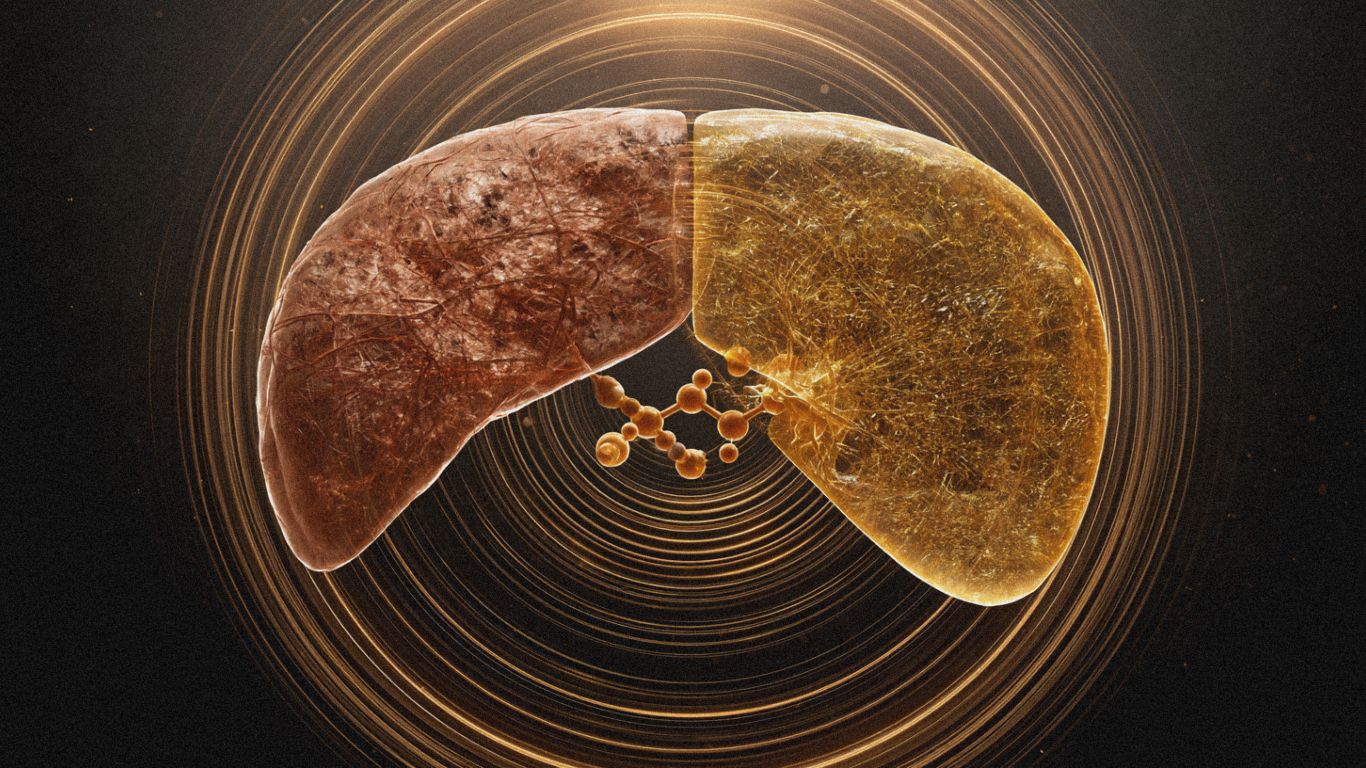
The GLP 1 story keeps widening, and MASH is the frontier that matters most right now. Novo Nordisk won conditional UK approval for Wegovy in metabolic dysfunction associated steatohepatitis, the serious liver disease formerly known as NASH, in adults with moderate to advanced fibrosis. That takes the drug into a disease that has been one of the hardest targets in medicine for two decades—a genuine graveyard of failed trials—and it does so by treating the liver problem as part of the same metabolic dysfunction that GLP 1s already address in obesity and diabetes.
MASH is not really a standalone liver problem. It is the liver’s expression of the same metabolic disease that drives weight gain, insulin resistance, and cardiovascular risk. Attack the upstream cause with a GLP 1 and the liver improves along with everything else. That is the insight the field missed for years while chasing liver specific mechanisms that kept failing in Phase 3.
The approval matters commercially because the MASH population overlaps heavily with the obesity and diabetes patients already taking these drugs. Novo does not need to build a new prescriber base from scratch. It can expand the label with the same physicians who are already writing Wegovy prescriptions. The obesity drug is quietly becoming a metabolic disease platform.
Meanwhile, AstraZeneca deepened a China research collaboration with CSPC just days after Congress opened its probe into the five biggest pharmas’ China trials. The industry is not pausing. And we owe you a correction on Ipsen.
Wegovy in MASH: What It Means for the Market
What Happened: Novo Nordisk won conditional UK marketing authorization for Wegovy (semaglutide) in adults with MASH and moderate to advanced liver fibrosis.
Why MASH Has Been So Hard
MASH has frustrated drug developers for twenty years. The disease progresses quietly. Fat accumulates in the liver, inflammation sets in, fibrosis develops, and eventually the liver scars badly enough to cause cirrhosis and liver failure. The process takes years or decades. Patients often have no symptoms until the damage is advanced. And the endpoints the FDA and other regulators require to prove a drug works in MASH—histological improvement on liver biopsy—are invasive, variable, and hard to standardize across large clinical trials.
Company after company poured billions into the space and came away with failed trials, withdrawn filings, and abandoned programs. The dedicated liver approaches—drugs targeting specific fibrotic pathways, inflammatory mediators, or metabolic processes within the liver itself—struggled because they were treating one piece of a systemic metabolic problem. It turns out that fixing the liver while the rest of the metabolic system remains disordered does not work well enough to move the needle on the clinical endpoints.
Why GLP 1s Succeeded Where Liver Drugs Failed
GLP 1s approach the problem from a completely different direction. Rather than targeting the liver specifically, they address the metabolic dysfunction that causes MASH in the first place. Weight loss reduces the fat burden on the liver. Improved insulin sensitivity reduces the metabolic stress driving inflammation. Better glycemic control reduces the downstream organ damage. The liver gets better because the whole system gets better.
That is why Novo can win a MASH approval with a drug that was developed for obesity and diabetes. Wegovy is not a liver drug. It is a metabolic disease drug, and MASH is a metabolic disease that happens to manifest in the liver. The clinical data showed that semaglutide improved fibrosis and resolved MASH in a meaningful proportion of patients, not by targeting liver biology directly but by fixing the metabolic environment that made the liver sick.
What This Means Competitively
The Wegovy MASH approval raises the bar for every dedicated MASH program still in development. Any company developing a liver specific therapy now has to prove it adds something that a GLP 1 does not already deliver. That is a harder case to make than it was a year ago.
The programs worth watching are the ones with a genuinely differentiated angle. Boehringer Ingelheim and Zealand Pharma’s survodutide, which we covered last month for its unusually fat selective body composition profile, could pair with or improve on GLP 1 monotherapy in MASH by preferentially reducing liver fat while preserving lean mass. GSK and SiranBio’s ALK7 inhibitor targets a similar body composition thesis. These programs have a story to tell beyond what a GLP 1 already does. The dedicated MASH names that only match what Wegovy delivers are the ones most exposed now.
For Lilly, the MASH expansion is both a threat and an opportunity. Lilly has its own liver disease programs and the retatrutide TRIUMPH program includes a MASH trial as one of the seven planned readouts. If retatrutide, which already delivered 28.3% weight loss (substantially more than Wegovy), also shows strong MASH data, Lilly would have the most potent GLP 1 based liver therapy on the market. The competition in MASH is about to get very crowded, and it will be fought along the same three axes we described when the Medicare Bridge launched: efficacy, convenience, and access.
Our Pro brief explains why GLP 1s cracked the MASH problem that liver specific drugs could not, identifies which programs behind Wegovy still have a differentiated story, and assesses what the approval means for dedicated MASH drug economics. [Details below.]
AstraZeneca Deepened a China Tie While Washington Started Digging
What Happened: AstraZeneca and China’s CSPC Pharmaceutical added renal disease to their research partnership through a new collaboration on small nucleic acid drug candidates.
The Timing Says Everything
On its own, this is a routine early stage research collaboration. In context, it is a statement. It lands days after the House Select Committee on China opened its investigation into the China trials of Merck, AbbVie, Lilly, Pfizer, and BMS, with all five companies required to respond by July 17. AstraZeneca was not among the five named in the probe. But the decision to deepen a Chinese partnership while the political temperature is rising tells you where the industry’s head is.
The companies signing China deals are making a judgment call. They believe the science and cost advantages of Chinese partnerships are durable and that the political friction, while real, will land as added disclosure and review rather than outright prohibition. An early stage research collaboration on nucleic acid drug candidates in renal disease is well below the threshold that draws congressional attention. AstraZeneca can move without much political risk on something this small.
The bigger question is whether any large licensing deal gets announced into the teeth of the investigation before the July 17 deadline. That would be a much stronger signal. A research tie is not the same as a multi billion dollar licensing commitment. We are watching two things over the next ten days: whether someone puts a big China deal on the table while the probe is live, and how the five named companies frame their responses as the deadline approaches.
The base case remains that the deal flow continues. The clinical data from Chinese biotechs are too strong and the pipeline needs too urgent for the industry to walk away. But the political premium on China sourcing is real and rising. Expect companies to keep signing early stage research agreements openly while getting more careful about the timing and framing of larger transactions.
A Correction on Ipsen, and What It Actually Shows
We owe you a correction. When we covered Ipsen’s Kartos acquisition on June 30, we described it as $450 million upfront and up to $1.75 billion in total. Clearer reporting since then shows those were two different Ipsen moves.
The Kartos deal was $450 million upfront for navtemadlin, the MDM2 inhibitor positioned alongside ruxolitinib in myelofibrosis. The up to $1.75 billion figure belonged to a separate Ipsen bid for Memo Therapeutics and its candidate potravitug. We should have separated them at the time.
The takeaway is unchanged and if anything stronger. Ipsen was not doing one deal. It was doing two deals at once. That reinforces the point we made about the M&A wave spreading beyond big pharma. When a French mid cap is running two acquisitions simultaneously, it is not being opportunistic. It is racing the same patent cliff clock that Lilly, AbbVie, and GSK are racing. The competitive pressure to restock pipelines is structural, and it does not discriminate by company size.
United Therapeutics Acquires Thymmune for $140M
What Happened: United Therapeutics acquired Thymmune Therapeutics for $140 million, gaining a thymus regeneration program with potential across immune deficiency and rare disease.
Why This Matters: The thymus is the organ where T cells mature and develop the immune specificity that protects against infections and cancer. It is one of the first organs to decline with age, shrinking significantly after puberty and continuing to atrophy throughout adult life. That decline contributes to the weakened immune function that makes older adults more vulnerable to infections, less responsive to vaccines, and more susceptible to certain cancers.
A therapy that regenerates the thymus would not address a single disease. It would address the immune decline that underlies dozens of conditions. That makes Thymmune a platform bet rather than a single product play. For United Therapeutics, which has built its business around pulmonary arterial hypertension and organ transplantation, adding immune regeneration capability opens a new strategic direction with potentially broad application.
Capital Markets: The Taps Stay Open
Three financing moves over the holiday stretch show the capital environment holding steady.
Scribe Therapeutics filed for a $75 million IPO, adding another gene editing name to a 2026 IPO class that has largely traded at or above debut prices. The gene editing space (Casgevy expanded via CNPV last week, Profluent and Ascidian acquired by Lilly, SonoThera raised $125 million for non viral delivery) continues to attract both public and private capital.
PureTech’s founded entity Celea Therapeutics closed a $180 million financing to push deupirfenidone into Phase 3 for idiopathic pulmonary fibrosis. IPF is a devastating lung disease with limited treatment options where a differentiated antifibrotic could have significant clinical and commercial impact.
And Insilico Medicine signed a strategic collaboration with Takeda to deploy its Pharma.AI platform across Takeda’s therapeutic areas. This extends the AI drug discovery deal spree that has already pulled in Sanofi, SK Biopharmaceuticals ($2.5 billion), and Servier ($888 million). Money keeps flowing to companies with a clear asset or a validated platform.
Strategic Themes
1. The Obesity Drug Just Became a Metabolic Disease Platform
Wegovy in obesity. Wegovy in cardiovascular risk reduction (SELECT trial). Now Wegovy in MASH. The drug has three distinct indications across three organ systems—fat tissue, the cardiovascular system, and the liver—and they all trace back to the same underlying metabolic dysfunction. The GLP 1 is not a weight loss drug that happens to help the liver. It is a metabolic disease drug that treats obesity, cardiovascular disease, and liver disease as expressions of the same problem. That reframing changes how the market thinks about the franchise’s runway, the competitive landscape, and the clinical value of keeping patients on therapy long term.
2. The China Deal Flow Is Not Pausing for Washington
AstraZeneca deepening a CSPC collaboration days after the House probe opened tells you the industry has made its calculation. The science wins. The economics win. The politics are a cost to be managed, not a reason to walk away. Whether that calculation holds depends on what happens between now and July 17, and on whether the Biotech Investment National Security Act gains real legislative momentum. But the early signal is that the deal side is not blinking.
3. Mid Cap M&A Is Structural, Not Opportunistic
Ipsen doing two deals at once. Zymeworks buying Theravance. Biogen buying RayThera. Servier buying Edgewise. Chiesi buying KalVista. UCB buying Candid and Neurona. The mid cap buyer wave that started in the spring has not faded. It has intensified. The patent cliff that forces Lilly to do 14 deals also forces Ipsen to do two at once. The driver is the same. The scale is different. The urgency is identical.
4. MASH Competition Is About to Get Very Crowded
Wegovy has a UK approval. Lilly has retatrutide’s TRIUMPH MASH trial in the pipeline. Survodutide has a fat selective angle. GSK/SiranBio’s ALK7 inhibitor targets body composition. Dedicated MASH programs from multiple companies are still in development. The liver disease market that no one could crack for twenty years now has its first GLP 1 based approval and a dozen programs racing to follow. The bar for the programs behind Wegovy just went up. Matching what a GLP 1 already delivers is no longer enough. Differentiation—through mechanism, through body composition effects, through combination potential—is the only path to commercial relevance in post Wegovy MASH.
Frequently Asked Questions
What is the Wegovy MASH approval?
Novo Nordisk won conditional UK marketing authorization for Wegovy (semaglutide) in adults with MASH and moderate to advanced liver fibrosis. It extends the GLP 1 beyond weight management and cardiovascular risk into liver disease. MASH has been one of the hardest targets in drug development for two decades.
Why did GLP 1s succeed in MASH where liver drugs failed?
MASH is the liver’s expression of systemic metabolic dysfunction. GLP 1s address the upstream metabolic disease (obesity, insulin resistance) rather than targeting the liver directly. When the metabolic system improves, the liver improves along with it. Dedicated liver drugs that targeted only hepatic pathways failed because they treated one piece of a systemic problem.
What is the AstraZeneca/CSPC deal?
A new small nucleic acid research collaboration in renal disease, expanding an existing partnership. The timing is notable because it lands days after the House China probe opened. AstraZeneca was not among the five named companies but the deal signals the industry is not pausing China engagement.
What is the Ipsen correction?
We initially described the Kartos acquisition as $450M upfront and up to $1.75B total. Those were actually two separate deals: Kartos at $450M for navtemadlin (myelofibrosis), and a separate bid of up to $1.75B for Memo Therapeutics and potravitug. Two deals at once from a mid cap reinforces the structural M&A thesis.
What is the United Therapeutics deal?
United Therapeutics acquired Thymmune Therapeutics for $140M for a thymus regeneration program with potential across immune deficiency and rare disease. The thymus is central to immune function and declines with age, making regeneration a platform bet.
When is the China probe deadline?
July 17. Merck, AbbVie, Lilly, Pfizer, and BMS must respond to the House Select Committee on China with details on data protection, ethics, and oversight at Chinese trial sites including Xinjiang and military hospitals.
BioMed Nexus Pro — What Institutional Subscribers Are Reading Today
MASH Was a Graveyard for Twenty Years. We explain why GLP 1s cracked the problem that dedicated liver drugs could not, identify which programs behind Wegovy have a genuinely differentiated story worth owning, and assess what the approval means for dedicated MASH drug valuations now that a GLP 1 has planted its flag.
The China Deal Wave Meets Its First Real Political Test. We read AstraZeneca’s timing and what it tells you about how the industry is processing the probe, lay out the difference between early stage research ties and large licensing deals in terms of political risk, and track the ten days to the July 17 deadline.
Two Ipsen Deals at Once, Corrected and in Context. We separate the Kartos and Memo transactions, analyze what mid cap buyers are hunting, and assess whether the structural M&A wave has room to run through the second half.
Plus: United Therapeutics thymus regeneration, Scribe IPO, Insilico/Takeda AI collaboration, capital markets update, and the full catalyst calendar through the July 17 deadline and beyond.
About BioMed Nexus
BioMed Nexus delivers institutional grade intelligence to biotech and pharma executives, investors, and clinicians. Our daily briefings and deep dive analyses cut through the noise to deliver the strategic insights that drive better decision making in the life sciences.
Subscribe to receive daily updates and gain access to BioMed Nexus Pro institutional intelligence briefs.