Every breakthrough drug has an invisible army behind it. Not just the scientists in lab coats or the executives signing deals — but the platforms, tools, and service companies that form the infrastructure of modern drug development. From the AI systems designing molecules to the sequencing platforms reading genomes to the software managing billion-dollar clinical trials, these are the companies that make the entire biotech engine run.
This is the definitive map of the biotech infrastructure stack in 2026 — the 50 companies powering how drugs are discovered, developed, tested, manufactured, and brought to patients.
Whether you are a biotech founder choosing your technology stack, an investor mapping the industry’s picks-and-shovels plays, or a professional trying to understand the machinery behind every FDA approval, this guide shows you who builds what — and why it matters.
This guide is updated quarterly. Companies featured are selected based on market position, technology differentiation, and industry adoption. Want to suggest a company? Contact us.
How to Use This Guide
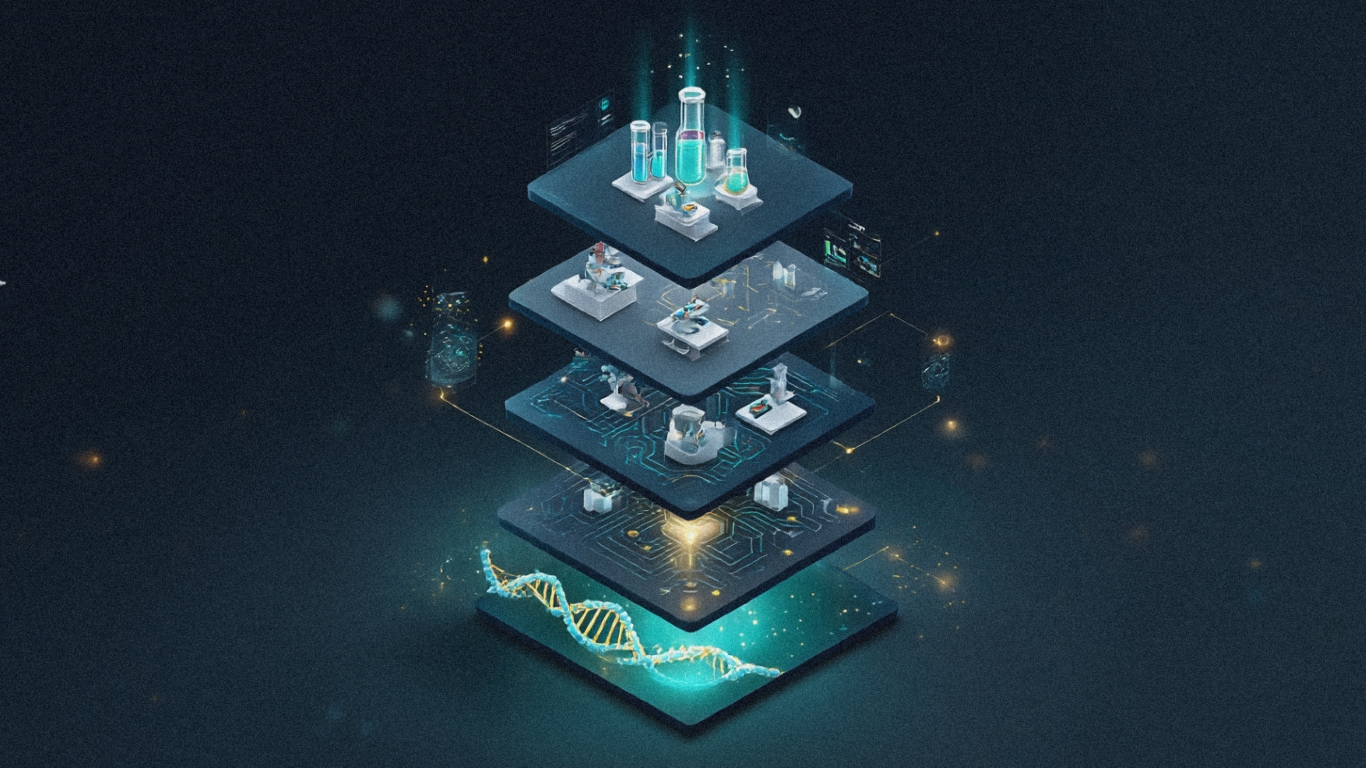
The biotech infrastructure stack is organized into eight layers, each representing a critical function in modern drug development. Think of it like the technology stack that powers a software company — except instead of servers and databases, you’re looking at AI platforms, sequencing instruments, and clinical trial networks.
Every drug that reaches a patient touches most of these layers. Understanding them is essential for anyone working in or investing in life sciences.
1. AI Drug Discovery Platforms
What this layer does: Uses artificial intelligence and machine learning to identify drug targets, design novel molecules, predict drug behavior, and accelerate the earliest stages of drug development. This layer has attracted over $5 billion in investment and is reshaping how the pharmaceutical industry approaches R&D.
Why it matters in 2026: AI drug discovery has moved from experimental to operational. Multiple AI-designed drugs are now in clinical trials, and every major pharmaceutical company has signed at least one AI platform deal. In January 2026 alone, Eli Lilly partnered with Chai Discovery, GSK with Noetik, and Pfizer with Boltz — signaling that 2026 is the year AI infrastructure becomes standard in pharma R&D.
Recursion Pharmaceuticals
Headquarters: Salt Lake City, UT | Founded: 2013 | Focus: Phenomics-driven drug discovery
Recursion has built one of the most data-rich drug discovery platforms in existence. Their automated wet labs use robotics and computer vision to capture millions of cellular experiments per week, feeding a continuously improving AI operating system. In partnership with NVIDIA, Recursion built BioHive-2, one of biopharma’s most powerful supercomputers. Their pipeline spans aggressive cancers and rare diseases, with multiple programs now in clinical development. What sets Recursion apart is their closed-loop system — data generates insights, insights generate experiments, and experiments generate more data.
Insilico Medicine
Headquarters: Hong Kong / New York | Founded: 2014 | Focus: Generative AI for target discovery and molecular design
Insilico Medicine was among the first companies to describe using generative AI for novel molecule design in a peer-reviewed journal, back in 2016. Their Pharma.AI platform spans biology, chemistry, and clinical development. With 22 preclinical candidates nominated since 2021, their most advanced asset, Rentosertib, has achieved positive Phase IIa results — representing one of the first proofs of concept for AI-driven drug development in the clinic. Insilico has signed software licensing agreements with 13 of the world’s top 20 pharmaceutical companies.
Isomorphic Labs
Headquarters: London, UK | Founded: 2021 | Focus: AI-first drug design built on AlphaFold
A spinout from Google DeepMind, Isomorphic Labs is building on the Nobel Prize-winning AlphaFold system to reimagine drug discovery from the ground up. Their team of drug discovery experts and machine learning specialists has built predictive and generative AI models designed to accelerate scientific discovery at digital speed. Isomorphic represents the deepest integration of frontier AI into pharmaceutical R&D.
Exscientia
Headquarters: Oxford, UK | Founded: 2012 | Focus: AI-driven precision medicine and molecular design
Exscientia was one of the first companies to advance an AI-designed drug into clinical development. Their platform integrates automated chemistry, deep learning models, and robotics to design drug candidates faster than traditional medicinal chemistry. Partners include Sanofi, Bristol Myers Squibb, and Merck KGaA.
Atomwise
Headquarters: San Francisco, CA | Founded: 2012 | Focus: Structure-based AI drug discovery
Atomwise’s AtomNet platform uses deep learning to predict how small molecules bind to specific proteins, screening billions of compounds against disease targets at a fraction of the time traditional methods require. The company collaborates with more than 250 research institutions across oncology, neurology, and infectious disease.
Iambic Therapeutics
Headquarters: San Diego, CA | Founded: 2021 | Focus: Physics-based AI for molecular design
Iambic combines physics-based AI algorithms with high-throughput experimentation, converting new molecular designs into biological insights on a weekly cycle. Their collaboration with Takeda underscores the platform’s ability to tackle the most challenging design problems in drug discovery. Iambic’s approach emphasizes putting AI innovations directly in the hands of experienced drug hunters.
Chai Discovery
Headquarters: San Francisco, CA | Founded: 2024 | Focus: AI-driven biologics design
One of the fastest-growing companies in this space, Chai Discovery closed a $130 million Series B in late 2025, reaching a $1.3 billion valuation just 18 months after launch. Their landmark deal with Eli Lilly in early 2026 — deploying Chai’s technology across multiple biologics targets with an exclusive AI model trained on Lilly’s proprietary data — represents a new model for pharma-AI partnerships.
BenevolentAI
Headquarters: London, UK | Founded: 2013 | Focus: Knowledge graph-based target discovery
BenevolentAI combines knowledge graphs, scientific literature mining, and machine learning to uncover new drug targets and repurpose existing molecules. Their platform maps complex biological relationships and identifies disease pathways with high therapeutic potential.
Emerging to watch: Noetik (cancer clinical outcome prediction, GSK partnership), Boltz (small molecule discovery, Pfizer partnership), XtalPi (digital twin molecular simulation)
2. Genomics & Sequencing Platforms
What this layer does: Provides the instruments, chemistry, and software that read DNA and RNA — the foundational data layer for everything from target discovery to companion diagnostics to patient stratification.
Why it matters in 2026: Sequencing costs continue to fall while applications multiply. Whole-genome sequencing is expanding rapidly in clinical settings, particularly in oncology therapy selection and minimal residual disease detection. The competitive landscape has never been more dynamic, with new entrants challenging Illumina’s long-standing dominance.
Illumina
Headquarters: San Diego, CA | Founded: 1998 | Focus: Short-read sequencing, clinical genomics
Illumina commands approximately 80% of the global sequencing market. Their NovaSeq and MiSeq platforms are the workhorses of genomics labs worldwide, producing the majority of the world’s sequencing data. Illumina estimates its total addressable market exceeds $100 billion in clinical applications alone, with key growth drivers in oncology therapy selection, minimal residual disease detection, and the broader adoption of whole-genome sequencing. In early 2026, Illumina launched a new long-read workflow at the AGBT conference, using cut-and-paste enzymes to generate longer reads on existing instruments — an attempt to bridge the gap with long-read competitors without requiring new hardware.
Pacific Biosciences (PacBio)
Headquarters: Menlo Park, CA | Founded: 2000 | Focus: Long-read, high-fidelity sequencing
PacBio’s HiFi sequencing technology produces reads exceeding 15 kilobases at greater than 99.9% accuracy — a combination of length and precision that no other platform matches. Their Revio platform is the fastest-growing instrument in PacBio’s history. Long-read sequencing can reveal parts of the genome that short-read technology misses entirely, which is why PacBio’s technology was chosen for the Telomere-to-Telomere project that finally completed the last 8% of the human genome.
Oxford Nanopore Technologies
Headquarters: Oxford, UK | Founded: 2005 | Focus: Real-time, portable nanopore sequencing
Oxford Nanopore’s technology directly reads single DNA molecules as they pass through a protein nanopore, enabling ultra-long reads and real-time data acquisition. Their MinION device — small enough to hold in one hand — has been used everywhere from clinical labs to the International Space Station. The PromethION platform now supports up to 200 gigabases per flow cell, pushing nanopore sequencing into population-scale genomics. Recent accuracy improvements have brought their base quality above 99%.
10x Genomics
Headquarters: Pleasanton, CA | Founded: 2012 | Focus: Single-cell genomics and spatial transcriptomics
10x Genomics’ Chromium platform is the gold standard in single-cell genomic analysis, with over 6,400 systems sold. The company is also a leader in spatial transcriptomics — analyzing gene expression within the physical context of tissue — which is becoming increasingly important in understanding tumor microenvironments and disease biology.
Element Biosciences
Headquarters: San Diego, CA | Founded: 2017 | Focus: Accessible, high-accuracy short-read sequencing
Element’s AVITI platform has achieved accuracy levels beyond Q40 (one error in 10,000 bases), setting a new standard for short-read quality. The company is positioned as a challenger to Illumina’s dominance, offering competitive pricing and accuracy that has attracted both academic and pharmaceutical customers.
Ultima Genomics
Headquarters: Fremont, CA | Founded: 2016 | Focus: Ultra-low-cost whole-genome sequencing
Ultima attracted major attention at AGBT 2026 with its launch of a sequencer and workflow offering bulk whole-genome sequencing at $80 per genome. If that price point holds at scale, it would fundamentally expand the applications for whole-genome sequencing in research and clinical practice.
Emerging to watch: Complete Genomics (BGI subsidiary, aggressive pricing), Singular Genomics, Roche Axelios (leveraging Roche’s diagnostics distribution)
3. Clinical Trial Software & Data Platforms
What this layer does: Provides the software infrastructure for designing, managing, monitoring, and analyzing clinical trials — from electronic data capture to trial management systems to patient engagement tools.
Why it matters in 2026: A single Phase III clinical trial can cost $100 million or more, and the average drug takes over a decade to reach market. The software platforms in this layer determine how efficiently that money and time are spent. The shift toward decentralized trials, adaptive designs, and AI-powered automation is transforming clinical operations.
Veeva Systems
Headquarters: Pleasanton, CA | Founded: 2007 | Focus: Unified cloud platform for life sciences
Veeva has become the operating system of the life sciences industry. Their Vault platform unifies clinical trial management (CTMS), electronic data capture (EDC), electronic trial master files (eTMF), and regulatory management into a single cloud-based system. Veeva reported $3.195 billion in annual revenue for fiscal year 2026, with non-GAAP operating margins around 44%. Their zero-downtime amendment capability — implementing protocol changes without interrupting live studies — has become a critical differentiator for adaptive and decentralized trials. Veeva is rolling out AI Agents across its product line through 2026, with clinical and regulatory modules expected by August 2026.
Medidata Solutions (Dassault Systèmes)
Headquarters: New York, NY | Founded: 1999 | Focus: Enterprise clinical data and trial management
Medidata Rave remains one of the most widely adopted electronic data capture systems globally, with over 700,000 certified site users. The Medidata Clinical Cloud centralizes clinical trial data across multiple modules and is the standard for complex, multi-site, multinational studies. Medidata is embedding AI-driven insights within study planning and execution, including trial feasibility predictions and AI-assisted protocol design.
Oracle Health Sciences
Headquarters: Austin, TX | Founded: (Oracle Clinical division) | Focus: Integrated clinical trial platform
Oracle Clinical One is the company’s next-generation platform, unifying electronic data capture, randomization, and advanced data management. Oracle’s long history in enterprise data management gives it deep capabilities in handling the complex data architectures required by large global trials.
Clario
Headquarters: Philadelphia, PA | Founded: 2021 (merger of ERT and Bioclinica) | Focus: Endpoint technology for clinical trials
Clario provides the technology that captures and analyzes clinical trial endpoint data — from cardiac safety monitoring to respiratory assessments to imaging analysis. Their platform processes data from over 19,000 clinical trials annually. When a biotech company needs to prove its drug works, Clario’s technology often generates the evidence.
Medable
Headquarters: Palo Alto, CA | Founded: 2015 | Focus: Decentralized clinical trial platform
Medable’s platform enables patient-centric, decentralized clinical trials with integrated EDC, ePRO (electronic patient-reported outcomes), and eConsent. As the industry moves toward virtual and hybrid trial models — accelerated by the pandemic — Medable has become a critical enabler for sponsors looking to reduce site dependency and expand patient access.
Signant Health
Headquarters: Blue Bell, PA | Founded: 2019 | Focus: Patient engagement and supply management
Signant’s platform addresses two of the biggest operational challenges in clinical trials: patient engagement (keeping participants enrolled and compliant) and supply management (ensuring the right drug reaches the right patient at the right site). Their solutions serve some of the world’s largest pharmaceutical companies.
Emerging to watch: Castor EDC (lean, accessible clinical data capture), Viedoc (rapid global deployment), Science 37 (virtual trial operations)
4. Biotech Data & Analytics Platforms
What this layer does: Aggregates, structures, and analyzes the massive datasets generated across drug development — from scientific literature and patent databases to real-world clinical data and competitive intelligence.
Why it matters in 2026: In an industry where a single data insight can mean the difference between a billion-dollar drug and a failed program, the platforms that organize and interpret biomedical data have become essential infrastructure.
IQVIA
Headquarters: Durham, NC | Founded: 2016 (merger of IMS Health and Quintiles) | Focus: Healthcare data, analytics, and clinical research services
IQVIA sits at the intersection of data and drug development. Their proprietary datasets cover prescription data, claims data, electronic health records, and genomic information across over 100 countries. This data infrastructure powers everything from clinical trial design to commercial launch strategy. IQVIA is also one of the world’s largest CROs by revenue.
Benchling
Headquarters: San Francisco, CA | Founded: 2012 | Focus: Cloud-based R&D platform for biotech
Benchling has become the standard lab informatics platform for biotech R&D teams, replacing outdated LIMS (laboratory information management systems) and electronic lab notebooks with a modern, cloud-native alternative. Their platform is used for experiment planning, data capture, and collaboration across biology teams.
Palantir Technologies
Headquarters: Denver, CO | Founded: 2003 | Focus: Enterprise data integration and analytics
Palantir’s Foundry platform has expanded deeply into life sciences, helping pharmaceutical companies integrate disparate data sources — clinical, genomic, manufacturing, commercial — into a unified analytical environment. Their partnerships with major pharma companies enable complex data workflows that would be impossible to manage with traditional tools.
Dotmatics
Headquarters: Boston, MA | Founded: 2021 (combination of multiple acquisitions) | Focus: Scientific informatics and data management
Dotmatics provides research informatics software for the entire drug discovery and development workflow, from early target identification through clinical development. Their platform connects chemistry, biology, and data science under one umbrella.
Evaluate (Novaquest)
Headquarters: London, UK | Founded: 2000 | Focus: Pharma competitive intelligence and market forecasting
Evaluate’s pharma and medtech databases are used by pharmaceutical companies, investors, and analysts to model drug revenue forecasts, assess pipeline value, and benchmark competitive positioning. Their annual Pharma Preview report is one of the industry’s most widely cited forecasting documents.
Clarivate (Cortellis)
Headquarters: London, UK | Founded: 2016 | Focus: Drug pipeline intelligence and patent analytics
Clarivate’s Cortellis platform provides comprehensive drug pipeline data, including deal terms, clinical trial intelligence, regulatory information, and patent analytics. It is a primary research tool for business development teams scouting for licensing and acquisition opportunities.
Emerging to watch: Vant AI (integrated data for clinical development), Deep 6 AI (clinical trial matching), Flatiron Health (oncology real-world data, Roche subsidiary)
5. CROs & Clinical Trial Networks
What this layer does: Executes clinical trials on behalf of pharmaceutical and biotech sponsors — managing sites, recruiting patients, monitoring safety, and generating the data that regulators use to approve drugs. The global CRO market exceeded $84 billion in 2025 and is projected to reach nearly $200 billion by 2034.
Why it matters in 2026: As patent cliffs force big pharma to acquire late-stage assets and as biotech companies increasingly outsource clinical execution, CROs have become indispensable partners. The largest CROs now function as strategic extensions of their clients’ development teams.
ICON plc
Headquarters: Dublin, Ireland | Founded: 1990 | Focus: Full-service global CRO
ICON became one of the world’s largest CROs following its acquisition of PRA Health Sciences. The combined organization offers end-to-end clinical development services, from Phase I through post-marketing surveillance, with particular strength in digital trial execution and patient recruitment.
Labcorp Drug Development (formerly Covance)
Headquarters: Burlington, NC | Founded: (Covance: 1987, rebranded 2021) | Focus: End-to-end drug development with integrated diagnostics
Labcorp’s drug development division leverages the company’s massive diagnostic testing network to optimize clinical trial design and patient selection. Their database of patient insights — drawn from Labcorp’s clinical laboratory operations — provides a unique advantage in site selection and enrollment.
Charles River Laboratories
Headquarters: Wilmington, MA | Founded: 1947 | Focus: Preclinical and early-stage drug development
Charles River is the dominant player in preclinical services — the testing that happens before a drug candidate ever enters human trials. Their services span discovery, safety assessment, and manufacturing support, making them the first infrastructure partner many biotech companies engage.
Medpace
Headquarters: Cincinnati, OH | Founded: 1992 | Focus: Full-service CRO for biotech companies
Medpace has carved out a strong niche serving small and mid-sized biotech companies with full-service clinical development support. Their integrated model — including central lab, bioanalytical, ECG, and imaging services — is designed to be a one-stop shop for emerging biotechs running their first pivotal trials.
Parexel International
Headquarters: Durham, NC | Founded: 1982 | Focus: Regulatory consulting and complex trial execution
Parexel specializes in regulatory strategy, rare disease trials, and decentralized clinical trial models. Their regulatory expertise is often the deciding factor for sponsors navigating complex approval pathways, particularly for novel modalities like gene therapies and cell therapies.
WuXi AppTec
Headquarters: Shanghai, China | Founded: 2000 | Focus: Global R&D and manufacturing services
WuXi AppTec operates one of the broadest service platforms in the industry, spanning drug discovery, development, and manufacturing. Their open-access model supports over 6,000 customers across more than 30 countries. WuXi has been rapidly expanding its global manufacturing footprint, including new facilities in Switzerland, Singapore, and the United States.
Fortrea
Headquarters: Durham, NC | Founded: 2023 (spun off from Labcorp) | Focus: Agile, technology-enabled clinical development
Fortrea was created as an independent CRO when Labcorp spun off its drug development business. The company emphasizes modular architectures and scalable solutions that enable sponsors to adapt quickly to changing protocol requirements.
PPD (Thermo Fisher Scientific)
Headquarters: Wilmington, NC | Founded: 1985 (acquired by Thermo Fisher 2021) | Focus: Clinical research services within the Thermo Fisher ecosystem
PPD’s integration into Thermo Fisher Scientific gives it access to the broader Thermo Fisher portfolio of analytical instruments, reagents, and laboratory services — a unique combination of clinical and analytical capabilities.
Emerging to watch: Advarra (IRB and regulatory services), Worldwide Clinical Trials (complex therapeutic areas), Novotech (Asia-Pacific specialist)
6. Lab Automation & Instrumentation
What this layer does: Provides the physical hardware and robotic systems that automate experiments, screening, sample handling, and quality control in drug discovery and development laboratories.
Why it matters in 2026: The speed of modern drug development is limited by laboratory throughput. Automation enables high-throughput screening of millions of compounds, precise handling of biological samples, and reproducible experimental conditions that are impossible to achieve manually.
Thermo Fisher Scientific
Headquarters: Waltham, MA | Founded: 2006 (merger of Thermo Electron and Fisher Scientific) | Focus: Laboratory instruments, reagents, consumables, and services
Thermo Fisher is the single largest supplier of scientific instrumentation and laboratory products in the world. Their products touch nearly every step of drug development — from mass spectrometers identifying drug metabolites to cell culture media growing the cells used in biologic manufacturing. Revenue exceeds $40 billion annually.
Agilent Technologies
Headquarters: Santa Clara, CA | Founded: 1999 (spun off from HP) | Focus: Analytical instruments and diagnostics
Agilent’s portfolio spans liquid chromatography, mass spectrometry, genomics tools, and cell analysis — the analytical backbone of pharmaceutical quality control and research laboratories. Their instruments are essential for characterizing drug molecules and ensuring manufacturing quality.
Hamilton Company
Headquarters: Reno, NV | Founded: 1953 | Focus: Automated liquid handling and robotics
Hamilton’s liquid handling robots are workhorses in drug discovery labs, automating the precise dispensing of nanoliter volumes across thousands of wells. Their systems enable the high-throughput screening workflows that are essential for identifying drug candidates from large compound libraries.
Beckman Coulter Life Sciences (Danaher)
Headquarters: Indianapolis, IN | Founded: 1935 | Focus: Centrifugation, flow cytometry, automated sample handling
Beckman Coulter’s instruments — particularly their flow cytometers and automated liquid handlers — are standard equipment in immunology, cell biology, and clinical research laboratories. Their Biomek liquid handling platform is widely used in genomics sample preparation.
PerkinElmer (Revvity)
Headquarters: Waltham, MA | Founded: 1937 (life sciences division rebranded as Revvity in 2023) | Focus: Detection, imaging, and informatics for life sciences
Revvity (formerly PerkinElmer’s life sciences division) provides high-content imaging systems, plate readers, and informatics software used in drug screening and cellular analysis. Their instruments are critical for phenotypic screening — evaluating how compounds affect living cells.
Tecan
Headquarters: Männedorf, Switzerland | Founded: 1980 | Focus: Laboratory automation and detection
Tecan’s Fluent and Freedom EVO platforms automate complex laboratory workflows, from sample preparation to assay execution. Their instruments are widely used in clinical diagnostics laboratories and pharmaceutical R&D, where reproducibility and throughput are paramount.
Emerging to watch: Opentrons (accessible open-source lab robotics), Automata (modular lab automation), SPT Labtech (miniaturized assay platforms)
7. Biotech Manufacturing & CDMO Infrastructure
What this layer does: Provides the manufacturing capabilities to produce drug substances and drug products at clinical and commercial scale. CDMOs (Contract Development and Manufacturing Organizations) have become essential partners as biologic drugs — which are far more complex to manufacture than traditional pills — dominate the pipeline.
Why it matters in 2026: Manufacturing is increasingly the bottleneck in drug development. Cell and gene therapies, mRNA medicines, and antibody-drug conjugates all require specialized production capabilities that most biotech companies do not have in-house. The reshoring of pharmaceutical manufacturing to the United States has also become a strategic priority.
Samsung Biologics
Headquarters: Incheon, South Korea | Founded: 2011 | Focus: Large-scale biologic manufacturing
Samsung Biologics operates the world’s largest biomanufacturing campus by capacity. Their facilities in Incheon can produce biologics at a scale that few competitors can match, serving as a critical manufacturing partner for global pharmaceutical companies.
Lonza
Headquarters: Basel, Switzerland | Founded: 1897 | Focus: CDMO for biologics, cell and gene therapy, and small molecules
Lonza is one of the most established CDMOs in the industry, offering manufacturing services across biologics, cell and gene therapies, and small molecules. Their Ibex Solutions campus in Visp, Switzerland is one of the most advanced biomanufacturing sites in the world.
Catalent
Headquarters: Somerset, NJ | Founded: 2007 | Focus: Drug delivery, development, and manufacturing
Catalent provides formulation, development, and manufacturing services across a wide range of dosage forms and modalities. They played a critical role in COVID-19 vaccine manufacturing and maintain a large network of facilities across North America, Europe, and Asia.
WuXi Biologics
Headquarters: Wuxi, China | Founded: 2010 | Focus: End-to-end biologics CDMO
WuXi Biologics offers an integrated platform for biologics discovery, development, and manufacturing, with a massive global manufacturing footprint. Their capacity expansion has been among the most aggressive in the CDMO industry.
National Resilience (Resilience)
Headquarters: San Diego, CA | Founded: 2020 | Focus: Advanced biomanufacturing for next-generation medicines
Resilience was founded with over $2 billion in initial funding to build a biomanufacturing network capable of producing the most complex medicines — including mRNA, gene therapies, and cell therapies. Their facilities are purpose-built for flexibility and rapid scale-up.
Fujifilm Diosynth Biotechnologies
Headquarters: Research Triangle Park, NC | Founded: 2011 | Focus: CDMO for biologics and advanced therapies
Fujifilm Diosynth has invested heavily in expanding its manufacturing capacity, including a massive new facility in North Carolina. They serve as a manufacturing partner for some of the industry’s most advanced biologic and gene therapy programs.
Emerging to watch: Abzena (ADC manufacturing specialist), Cytiva (bioprocessing equipment, Danaher subsidiary), Sartorius (bioprocess solutions and equipment)
8. Regulatory, Safety & Compliance Infrastructure
What this layer does: Provides the software, services, and data platforms that help pharmaceutical companies navigate regulatory submissions, pharmacovigilance (drug safety monitoring), and compliance with global health authority requirements.
Why it matters in 2026: Regulatory complexity is increasing as new modalities (gene therapies, cell therapies, AI-designed drugs) challenge existing frameworks. The FDA, EMA, and other agencies are also introducing new requirements around AI transparency, real-world evidence, and post-marketing surveillance.
Veeva Vault RIM
Headquarters: Pleasanton, CA | Focus: Regulatory information management
Veeva’s RIM (Regulatory Information Management) suite manages the entire regulatory lifecycle — from submission planning and health authority interactions to labeling and compliance. It is the dominant platform for managing global regulatory operations in large pharmaceutical companies.
IQVIA RegulatoryOne
Headquarters: Durham, NC | Focus: Regulatory intelligence and submissions management
IQVIA’s regulatory platform combines a comprehensive database of global regulatory requirements with workflow tools for managing submissions. Their regulatory intelligence covers over 130 countries, making it essential for companies with global filing strategies.
ArisGlobal
Headquarters: Miami, FL | Founded: 2006 | Focus: Life science regulatory and pharmacovigilance software
ArisGlobal’s LifeSphere platform automates regulatory submissions, drug safety case processing, and clinical trial reporting. Their AI-powered pharmacovigilance module can automatically process adverse event reports, reducing the manual burden of safety monitoring.
Oracle Argus Safety
Headquarters: Austin, TX | Focus: Pharmacovigilance and adverse event management
Oracle Argus is one of the most widely deployed drug safety databases in the pharmaceutical industry. It manages the collection, assessment, and reporting of adverse events — a regulatory requirement for every marketed drug.
MasterControl
Headquarters: Salt Lake City, UT | Founded: 1993 | Focus: Quality management and compliance
MasterControl provides quality management software for pharmaceutical manufacturing, including document control, CAPA (corrective and preventive actions), training management, and audit management. Their platform helps companies maintain compliance with FDA and international quality standards.
Emerging to watch: Navitas Life Sciences (integrated regulatory services), Parexel regulatory consulting division, Generis (CARA regulatory intelligence)
The Stack in Context: How These Layers Work Together
No drug reaches a patient through a single layer. Here is how a typical biotech program flows through the stack:
Target Discovery → An AI platform (Layer 1) identifies a promising drug target by analyzing genomic data generated by sequencing platforms (Layer 2).
Hit Identification → Automated screening in a lab (Layer 6) tests thousands of molecules against the target. Data is captured in a research informatics platform (Layer 4).
Preclinical Development → A CRO (Layer 5) runs safety and efficacy studies in animal models. A CDMO (Layer 7) begins developing the manufacturing process.
Clinical Trials → Clinical trial software (Layer 3) manages study design, site selection, patient enrollment, and data capture. The CRO (Layer 5) monitors sites and collects safety data.
Regulatory Submission → Regulatory platforms (Layer 8) compile the data into an application for the FDA or EMA. Safety databases track ongoing adverse events.
Commercial Launch → Real-world data platforms (Layer 4) track the drug’s performance in clinical practice. Manufacturing partners (Layer 7) scale up production.
Every company in this guide plays a role in this chain. And the biotechs that choose the right partners at each layer are the ones that bring drugs to patients faster, cheaper, and more reliably.
What’s Missing From This Map
No infrastructure guide is comprehensive. Several critical layers are evolving rapidly and deserve their own dedicated coverage:
Patient recruitment platforms (Trinetx, Deep 6 AI) are becoming increasingly important as trial enrollment remains the number one reason clinical programs are delayed.
Real-world evidence platforms (Flatiron Health, Aetion, Tempus) are changing how drugs are evaluated after approval.
Digital health and remote monitoring (Apple HealthKit integration, wearables for endpoint capture) is creating new data streams for clinical trials.
Bioprocessing equipment (Cytiva, Sartorius, Pall) is the hardware layer beneath the CDMO services listed above.
We plan to cover each of these in dedicated future reports.
Methodology
Companies included in this guide were selected based on four criteria: market adoption (how widely the technology is used across the industry), technology differentiation (what makes the platform unique), strategic importance (how critical the company is to its layer of the stack), and 2026 relevance (recent partnerships, product launches, or market developments that demonstrate current momentum).
This guide does not include every company in each category. It highlights the companies that are most representative of how the infrastructure stack is structured and evolving.
Is your company part of the biotech infrastructure stack? We update this guide quarterly and welcome nominations. Contact us with your company details, and our editorial team will evaluate inclusion in the next update.
Stay Ahead of the Infrastructure Shifts
The companies in this guide are the picks and shovels of the biotech gold rush. Understanding who builds what — and how these layers interact — gives you a structural advantage whether you’re investing, building, or operating in life sciences.
Subscribe to BioMed Nexus for daily updates on the companies, deals, and technology shifts reshaping biotech infrastructure.
Last updated: March 2026. Next update: June 2026.
Tags: biotech infrastructure, drug development platforms, AI drug discovery companies, clinical trial software, CRO companies, biotech tools, genomics sequencing companies, biotech manufacturing CDMO, pharma technology stack, life science platforms 2026